

 https://doi.org/10.4081/ahr.2026.201
MICROBIOTA–IMMUNE–BRAIN MECHANISMS IN CHRONIC PAIN: A STRUCTURED NARRATIVE SYNTHESIS OF TRANSLATIONAL AND CLINICAL EVIDENCE
Y. Tran Van1, P.P. Van1, C.B.N. Uyen2, A. Caruso3, G. Farì4, M.L.G. Leoni5, G. Varrassi6 | 1Department of Biomedical Engineering, International University, Vietnam National University, Ho Chi Minh City, Vietnam; 2Department of Anesthesiology, Vinmec Central Park Hospital, Ho Chi Minh city, Vietnam; 3Department of Surgery, ASST Lodi, Lodi, Italy; 4Department of Experimental Medicine (Di.Me.S.), University of Salento, Lecce, Italy; 5Department of Medical and Surgical Sciences and Translational Medicine, Sapienza University of Rome, Italy; 6Fondazione Paolo Procacci, Rome, Italy
All claims expressed in this article are solely those of the authors and do not necessarily represent those of their affiliated organizations, or those of the publisher, the editors and the reviewers. Any product that may be evaluated in this article or claim that may be made by its manufacturer is not guaranteed or endorsed by the publisher.
Published: 6 May 2026
Background and Aims. Chronic pain has been increasingly conceptualized as a systems-level disorder influenced by immune dysregulation and host–microbe interactions. We aimed to synthesize mechanistic and translational evidence linking gut microbiota perturbations to peripheral and central sensitization across major chronic pain phenotypes and to appraise microbiota-targeted therapeutic implications.
Methods. We conducted a structured narrative review guided by SANRA principles. PubMed/MEDLINE, Scopus, and Web of Science were searched (January 2010–present; emphasis 2018–present) using terms related to “microbiota/dysbiosis, immune signaling (e.g., TLR4, inflammasome), microglia, short-chain fatty acids (SCFAs), gut–brain axis, and pain phenotypes (e.g., fibromyalgia, neuropathic pain, IBS)." Priority was given to mechanistic studies, causal translational models (germ-free/antibiotic perturbation, fecal microbiota transfer), and well-phenotyped clinical cohorts.
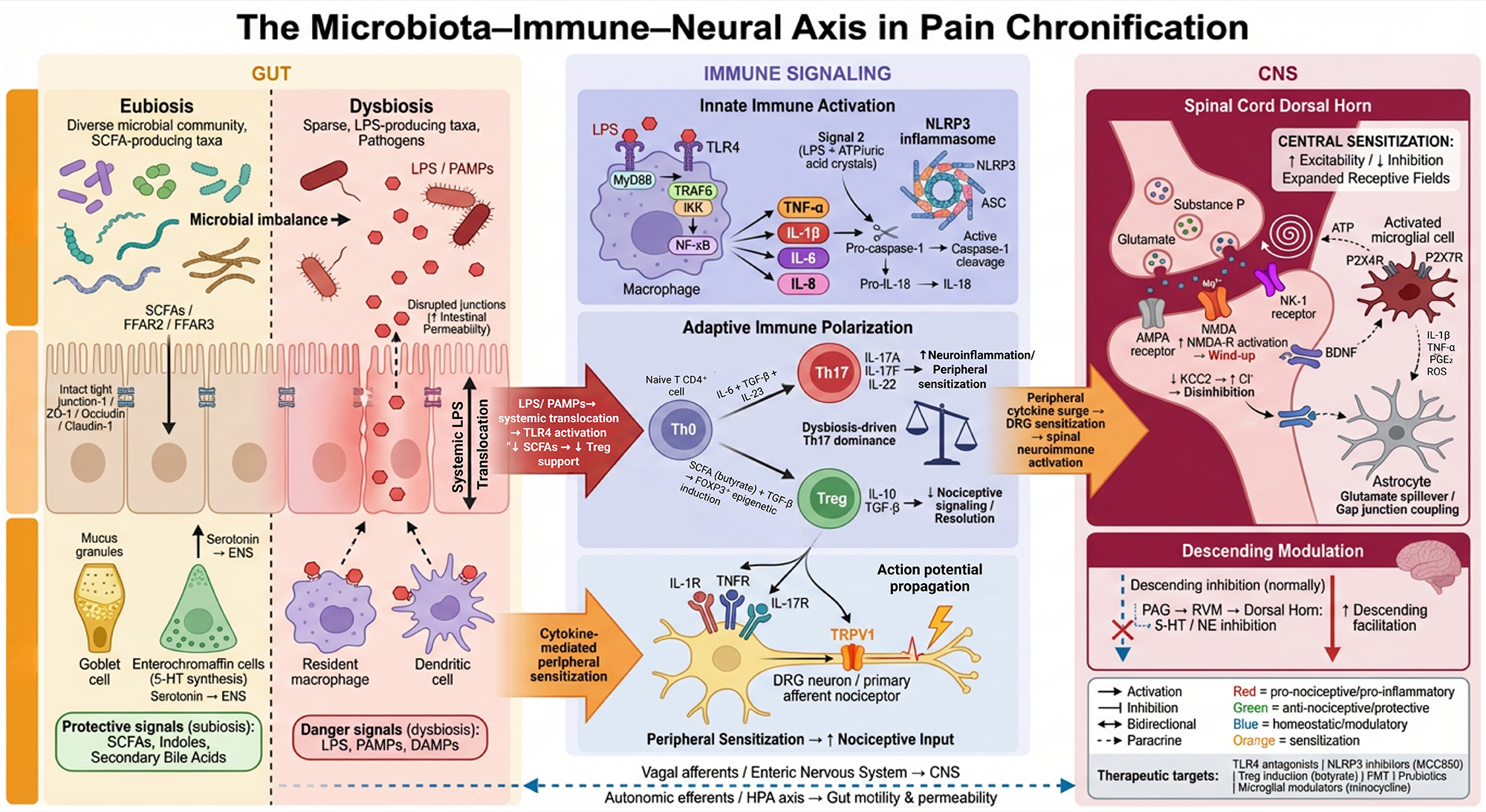
Results. Across nociplastic, neuropathic, visceral, and musculoskeletal pain conditions, studies recurrently report reduced microbial diversity and shifts away from SCFA-producing taxa alongside enrichment of taxa linked to inflammatory signatures. Dysbiosis-related barrier dysfunction and microbial-associated molecular patterns can engage innate immune pathways (notably TLR4 and NLRP3), amplifying cytokine signaling that sensitizes nociceptors and primes central neuroinflammation. Microbiota-derived metabolites (SCFAs, tryptophan, and bile acid derivatives) modulate epithelial integrity, T-cell polarization, and microglial set-points, providing plausible mechanistic routes to pain chronification. Causal support is strongest in selected translational models, including fibromyalgia donor microbiota inducing pain-like behaviors in germ-free mice.
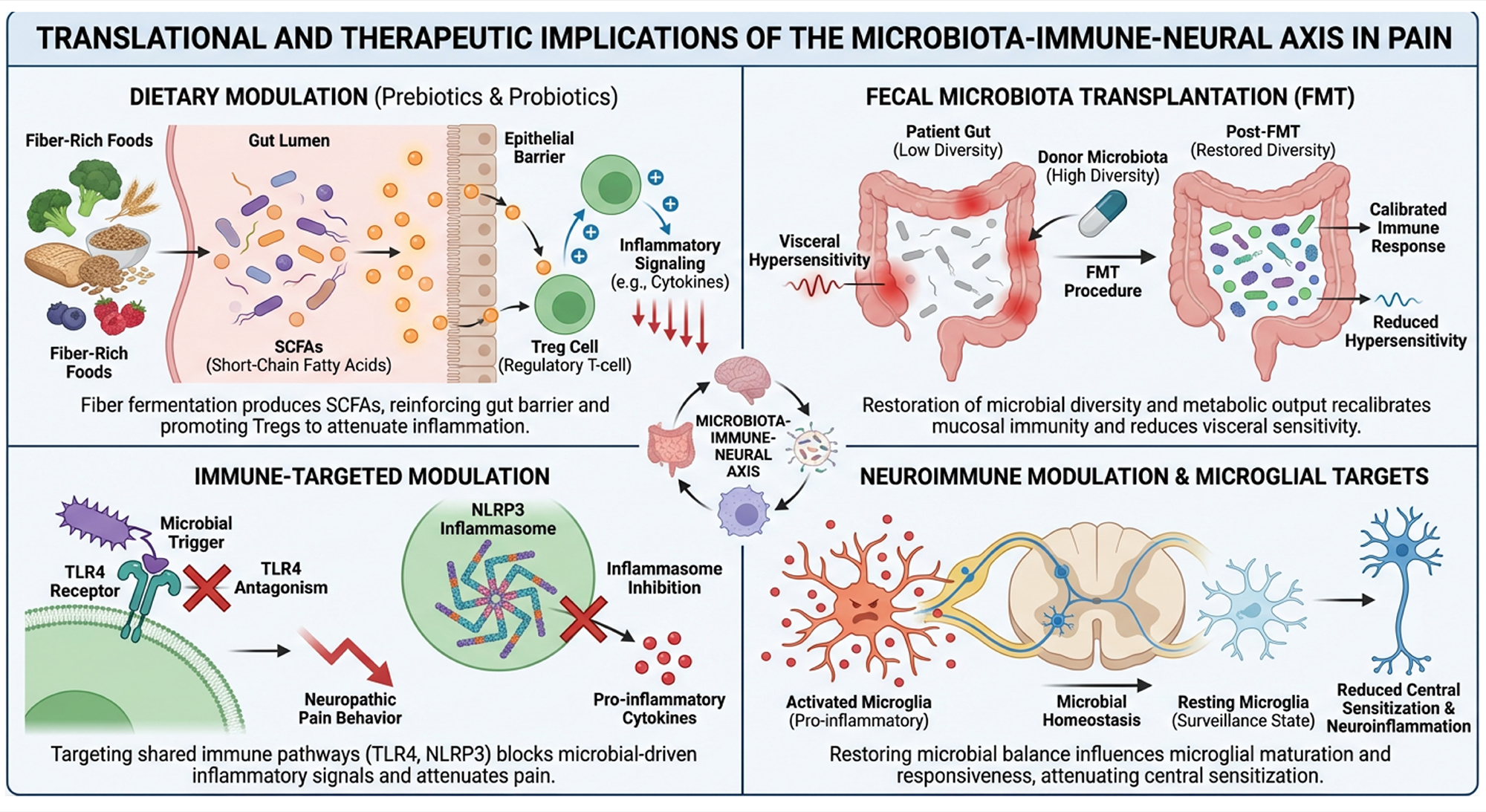
Conclusions. The gut microbiota–immune–brain axis offers a coherent mechanistic framework for pain vulnerability and persistence, but human causality, reproducibility, and phenotype stratification remain key gaps. Future studies should integrate multi-omics with endotype-based trial designs to test targeted microbiota interventions.

Downloads
How to Cite

This work is licensed under a Creative Commons Attribution-NonCommercial 4.0 International License.
PAGEPress has chosen to apply the Creative Commons Attribution NonCommercial 4.0 International License (CC BY-NC 4.0) to all manuscripts to be published.