

 https://doi.org/10.4081/ahr.2026.181
REAL-WORLD TITRATION PATHWAYS AND THERAPEUTIC INTEGRATION OF MEDICAL CANNABIS IN FIBROMYALGIA: INTERIM ANALYSIS OF A REFRACTORY CLINICAL COHORT
I. Olivieri, G. Di Giuseppe, R. Berrettoni, C. Angeletti | Department of Anaesthesia, Intensive Care and Pain Medicine, Mazzini Hospital, Teramo, Italy
All claims expressed in this article are solely those of the authors and do not necessarily represent those of their affiliated organizations, or those of the publisher, the editors and the reviewers. Any product that may be evaluated in this article or claim that may be made by its manufacturer is not guaranteed or endorsed by the publisher.
Published: 6 May 2026
Background and Aims. Fibromyalgia is a chronic pain disorder often resistant to standard drug treatments, including antidepressants, gabapentinoids, non-steroidal anti-inflammatory drugs, and opioids. Medical cannabis has become a possible treatment option, but real-world data on its clinical use, dosage adjustment methods, and time to achieve stability are still limited. This study aimed to examine real-world patterns of cannabis initiation, titration approaches, and therapeutic stabilization among fibromyalgia patients.
Methods. We conducted a descriptive interim analysis of a clinical dataset involving fibromyalgia patients treated with medical cannabis in a specialized pain management setting. Demographic details, previous pharmacological therapies, cannabis formulations, and treatment progression were examined. Special attention was given to titration strategies, formulation adjustments, and the time to achieve therapeutic stabilization.
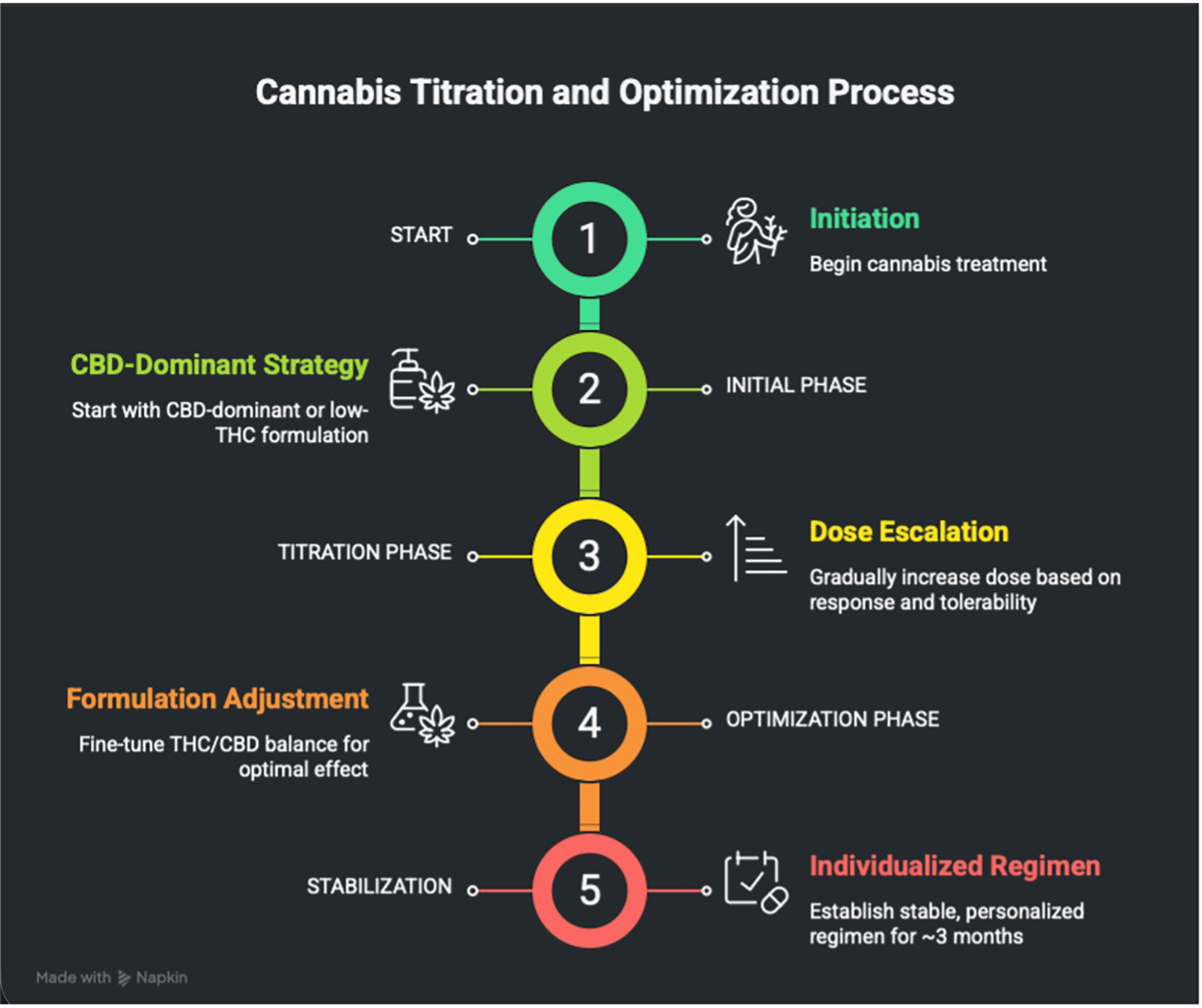
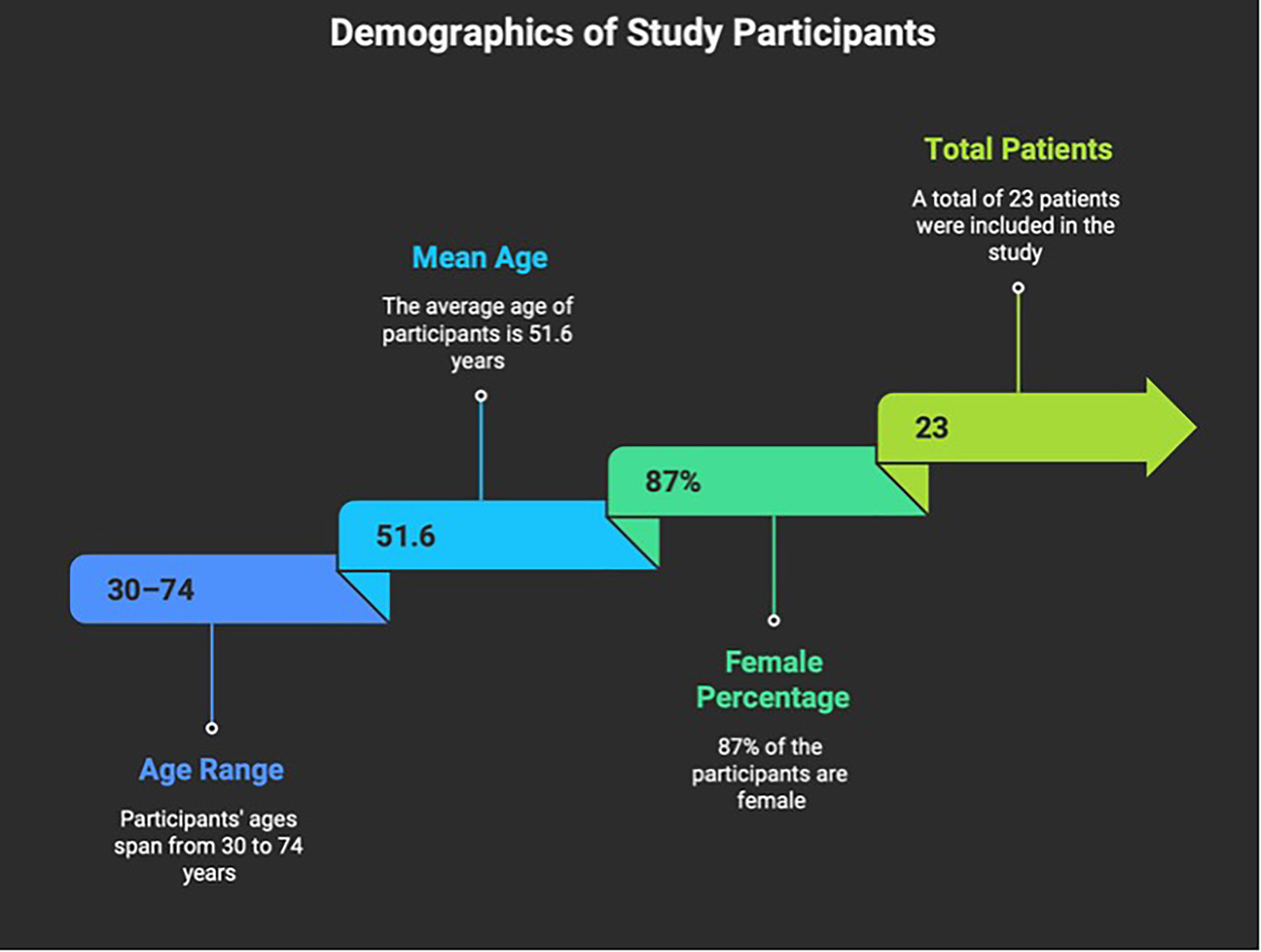
Results. Twenty-three patients were included (87% female; mean age 51.6 years). All patients had prior exposure to multiple pharmacological treatments, confirming a refractory population. Cannabis therapy was initiated using low-dose, CBD-dominant, or low-THC formulations, followed by gradual titration based on clinical response. Multiple titration steps were often necessary, including dose escalation and switching to balanced THC/CBD preparations. A consistent pattern emerged in which stabilization of therapy was achieved after a prolonged titration phase, typically within approximately three months from the start, suggesting the existence of a clinically significant titration window.
Conclusions. Medical cannabis for fibromyalgia is introduced amid pharmacological failure and requires personalized, incremental titration. The observed three-month titration period emphasizes the need for adaptable treatment strategies instead of fixed-dose methods. Continued data collection with standardized outcomes will further clarify its clinical role.
Downloads
How to Cite

This work is licensed under a Creative Commons Attribution-NonCommercial 4.0 International License.
PAGEPress has chosen to apply the Creative Commons Attribution NonCommercial 4.0 International License (CC BY-NC 4.0) to all manuscripts to be published.