

 https://doi.org/10.4081/ahr.2026.172
THORACOLUMBAR JUNCTION SYNDROME AS AN UNDERRECOGNIZED SOURCE OF PELVIC AND HIP PAIN: DIAGNOSTIC AND THERAPEUTIC IMPLICATIONS
S.C. Longo1, F. Quarta2, S. Lanza1, L. De Palma3, G. Frasca3, R. Lopes4, G. Farì5 | 1Rehabilitation Unit, M. Paternò Arezzo Hospital, Ragusa, Italy; 2Department of Biological and Environmental Science and Technologies (Di.S.Te.B.A.), University of Salento, Lecce, Italy; 3Department of Translational Biomedicine and Neuroscience (DiBraiN), University of Bari "Aldo Moro", Bari, Italy; 4Department of Biomedical and Biotechonological Sciences, University of Catania, Italy; 5Department of Experimental Medicine (Di.Me.S.), University of Salento, Lecce, Italy
All claims expressed in this article are solely those of the authors and do not necessarily represent those of their affiliated organizations, or those of the publisher, the editors and the reviewers. Any product that may be evaluated in this article or claim that may be made by its manufacturer is not guaranteed or endorsed by the publisher.
Published: 6 May 2026
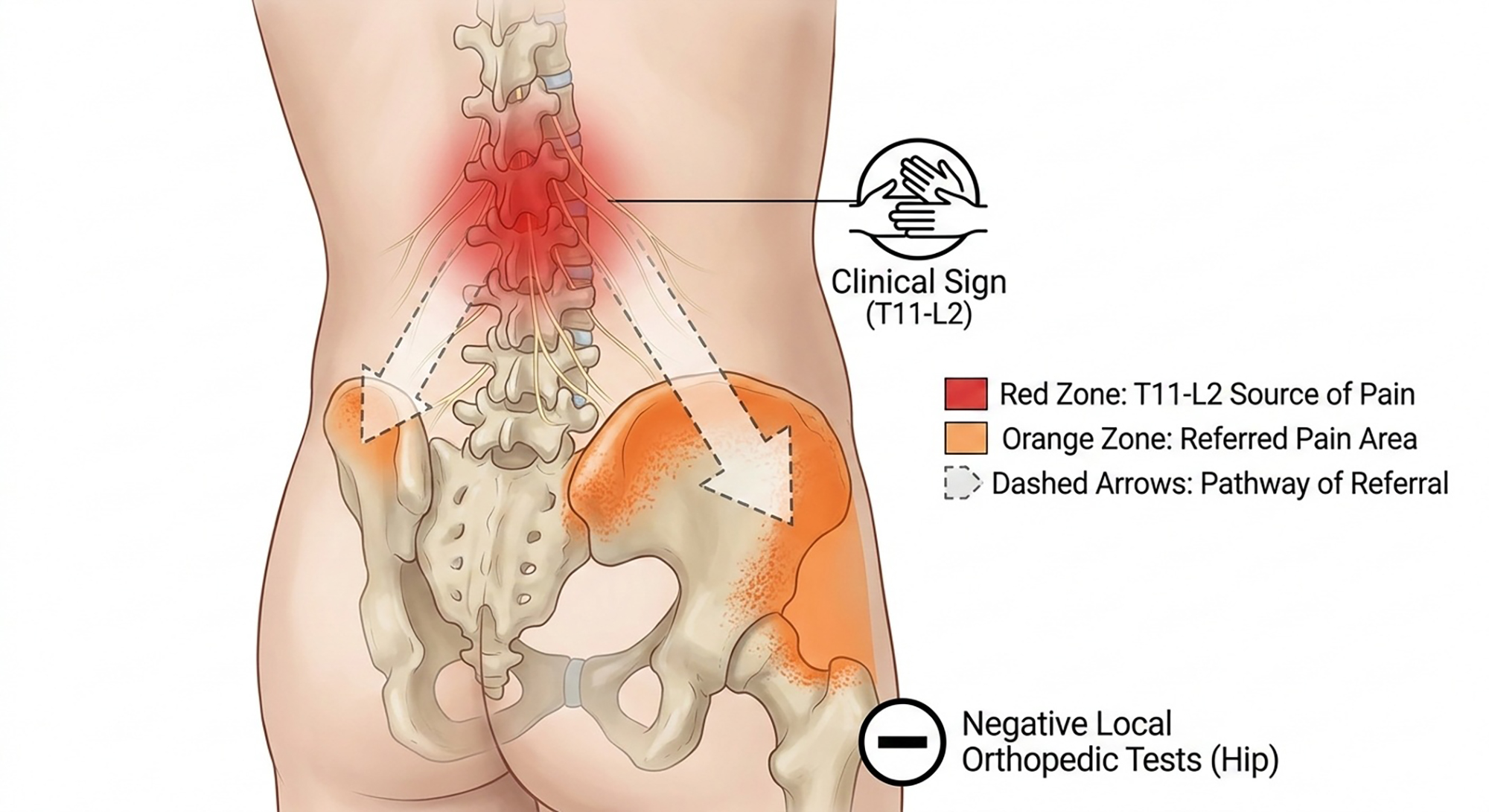
Background and Aims. Chronic pelvic and hip pain is frequently attributed to lumbar or intra-articular hip disorders, while the thoracolumbar junction (T11–L2) remains underexplored as a potential pain generator. Thoracolumbar junction syndrome (TLJS), originally described by Maigne, may produce referred pain mimicking hip or visceral pathology. The aim of this study was to analyze diagnostic features and therapeutic outcomes associated with TLJS in patients with chronic lumbopelvic pain.
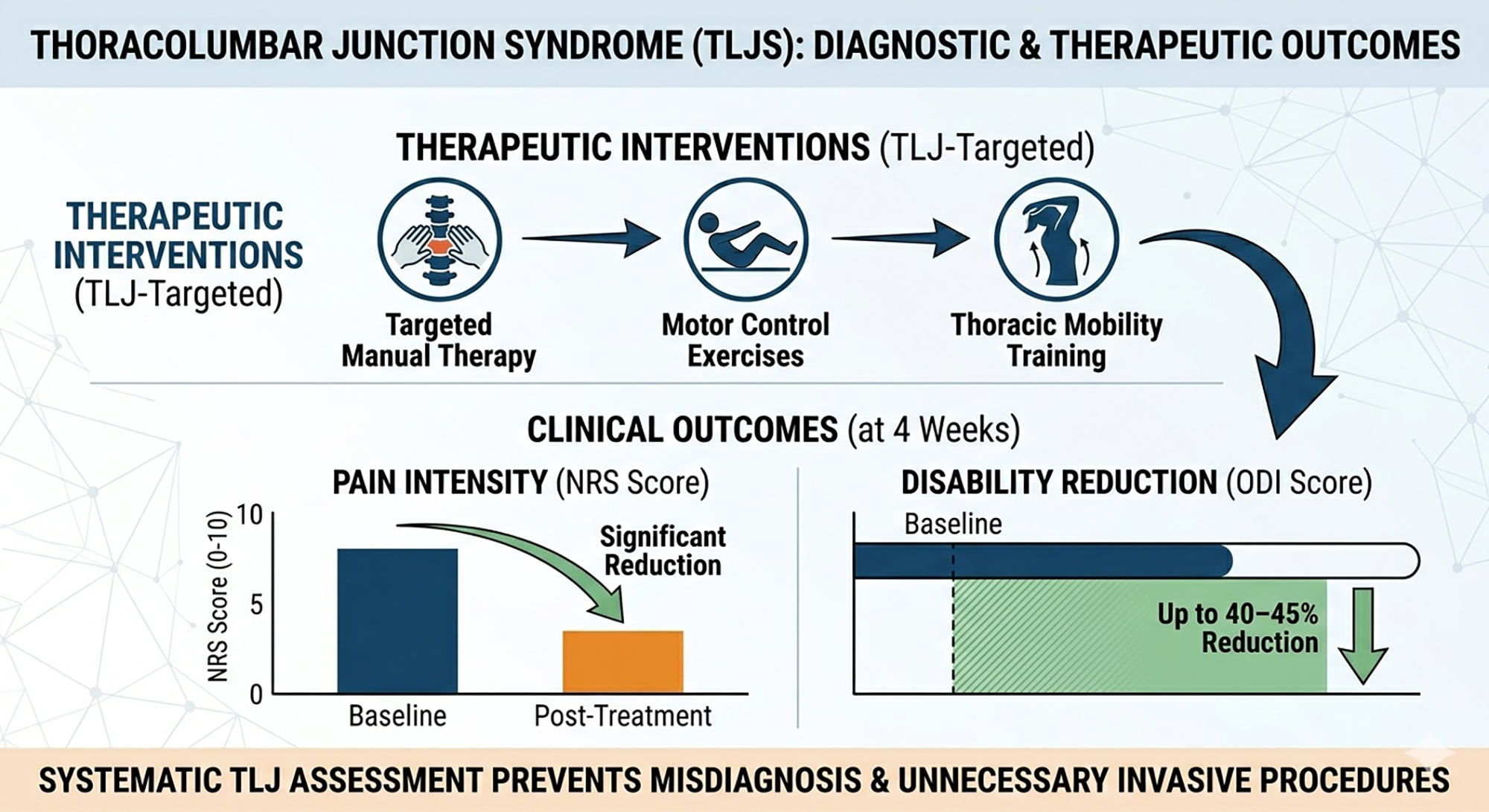
Methods. A narrative review of the literature published between 2013 and 2025 was conducted, integrating clinical studies, case series, and randomized controlled trials focusing on TLJS. Diagnostic criteria included Maigne’s clinical tests (pinch-roll test and segmental palpation). Pain intensity and disability were assessed using the Numerical Rating Scale (NRS) and the Oswestry Disability Index (ODI). Therapeutic interventions included manual therapy targeting the thoracolumbar junction, motor control exercises, and thoracic mobility training.
Results. Across the analyzed studies, patients presenting with hip or iliac crest pain and negative local orthopedic tests frequently showed positive TLJ clinical signs. Spine-directed treatment resulted in significant symptom improvement, with mean NRS scores decreasing from 6–7 to near-minimal values and ODI reductions of up to 40–45% within four weeks. Multimodal rehabilitation approaches demonstrated superior outcomes compared to local or symptom-based treatments alone.
Conclusions. Thoracolumbar junction syndrome represents a frequent but underdiagnosed cause of pelvic and hip pain. Systematic assessment of the thoracolumbar junction should be integrated into the clinical evaluation of patients with unexplained lumbopelvic pain. Targeted manual and rehabilitative interventions appear effective in reducing pain and disability, potentially preventing misdiagnosis.
Downloads
How to Cite

This work is licensed under a Creative Commons Attribution-NonCommercial 4.0 International License.
PAGEPress has chosen to apply the Creative Commons Attribution NonCommercial 4.0 International License (CC BY-NC 4.0) to all manuscripts to be published.