
 https://doi.org/10.4081/ahr.2026.159
GENDER DIFFERENCES IN THE PRESENTATION AND MANAGEMENT OF CHRONIC PAIN: EVIDENCE FROM AN OBSERVATIONAL STUDY
L. Farina1, A.A. Carrideo1, N. Di Francesco1, T. Di Foggia1, C. Gallo2, G. Cinnella1 | 1Pain Therapy Clinic Ambulatory, Foggia University Hospital, Foggia, Italy; 2Department of Clinical and Experimental Medicine, University of Foggia, Italy
All claims expressed in this article are solely those of the authors and do not necessarily represent those of their affiliated organizations, or those of the publisher, the editors and the reviewers. Any product that may be evaluated in this article or claim that may be made by its manufacturer is not guaranteed or endorsed by the publisher.
Published: 6 May 2026
Background and Aims. Gender-specific medicine in pain management requires considering biological sex and psychosocial factors, as they influence the prevalence, perception, and outcomes of pain treatment. The objective is to analyze the interaction between pain intensity, biopsychosocial impact, and disability.
Methods. The observational study was conducted at the Pain Medicine Outpatient Clinic of the Foggia Polyclinic on adult patients suffering from chronic persistent pain. The analysis involved 85 patients (32 males and 53 females). Internationally validated scales were used: NRS, Oswestry Disability Index, and Hamilton. Statistical correlations between these indices, clinical covariates, and administered therapies were assessed, monitoring recurrence rates at 1-, 3-, and 6-month follow-ups.
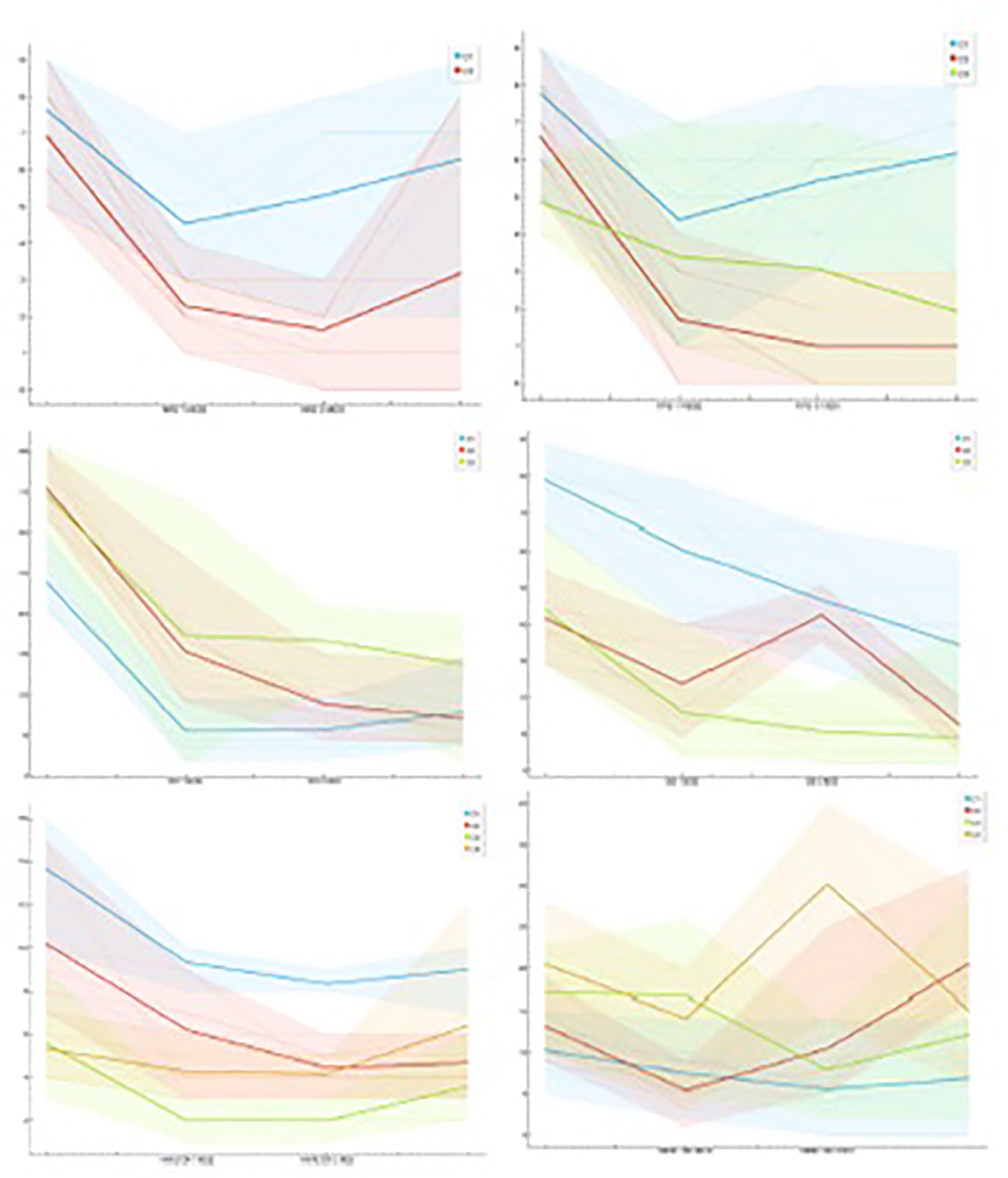
Results. Male patients presented at admission with higher pain intensity (NRS 7.1 vs. 6.5) and functional disability (ODI 63 vs. 40). Females show a higher Hamilton score (11 vs. 8). The temporal analysis clearly shows the different behaviors of the two genders. In males (NRS-ODI: r = 0.730), treatment approaches are delayed ("male stoicism") until the onset of actual disability. In females, functional resilience is greater but influenced by emotional state (Hamilton-ODI: r = 0.461). Males receive more interventional therapies (fix-it approach) than females (conservative medicalization).
Conclusions. In males, the interventional approach must be integrated with counseling and functional rehabilitation to prevent relapses. In females, early management of the anxiety-depressive component that underpins disability and reconsidering the use of interventional therapy are priorities.

Downloads
How to Cite

This work is licensed under a Creative Commons Attribution-NonCommercial 4.0 International License.
PAGEPress has chosen to apply the Creative Commons Attribution NonCommercial 4.0 International License (CC BY-NC 4.0) to all manuscripts to be published.