

 https://doi.org/10.4081/ahr.2026.157
CHRONIC PAIN TREATMENT DURING PREGNANCY: NAVIGATING THE EVIDENCE GREY ZONE
G. Di Giuseppe, I. Olivieri, C. Angeletti | Department of Anaesthesia, Intensive Care and Pain Medicine, Mazzini Hospital, Teramo, Italy
All claims expressed in this article are solely those of the authors and do not necessarily represent those of their affiliated organizations, or those of the publisher, the editors and the reviewers. Any product that may be evaluated in this article or claim that may be made by its manufacturer is not guaranteed or endorsed by the publisher.
Published: 6 May 2026
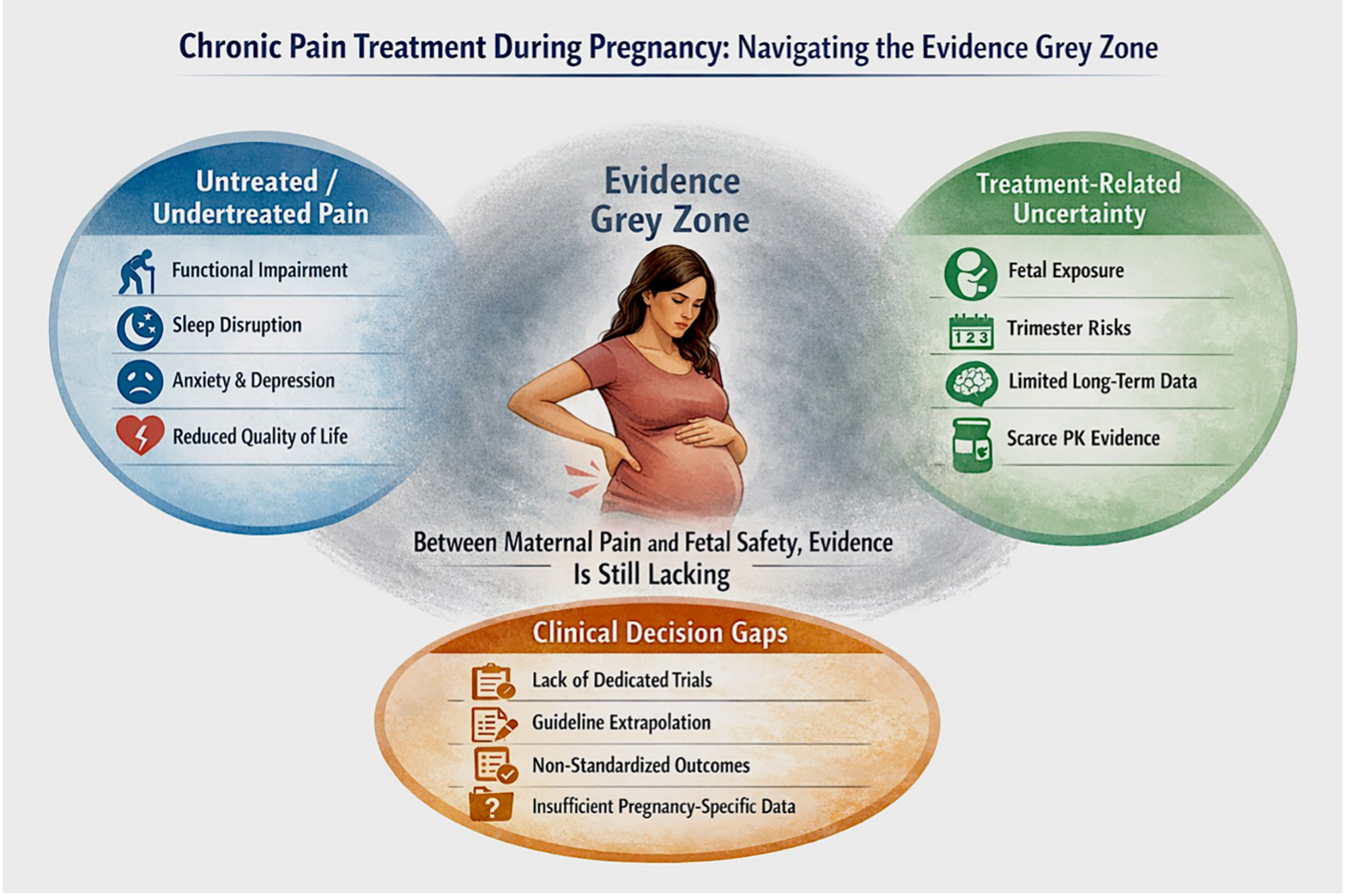
Background and Aims. Chronic pain during pregnancy is a significant yet underexplored condition. Low back pain, pelvic girdle pain, neuropathic syndromes, headache, fibromyalgia, and pre-existing chronic pain disorders can considerably impair mobility, sleep, daily functioning, and psychological well-being. Despite this burden, therapeutic decisions remain challenging because maternal needs for symptom control must be balanced against fetal and neonatal safety within a limited and often inconsistent evidence base. This review aims to provide a clinically oriented overview of the main evidence gaps affecting the pharmacological management of chronic pain during pregnancy and to highlight key priorities for future research.
Methods. We performed a narrative review of the existing literature on pharmacological treatment of chronic pain during pregnancy, focusing on five key areas: the availability of pregnancy-specific data, pharmacokinetic evidence, maternal-fetal safety, long-term outcomes for offspring, and the methodological consistency of published studies and recommendations.
Results. Current evidence remains fragmented, heterogeneous, and often indirect. Pharmacokinetic data in pregnant women are limited, long-term neurodevelopmental outcomes are inadequately defined for many common analgesic or adjuvant drugs, and reported endpoints differ significantly across studies. As a result, many treatment decisions are based on extrapolation from non-pregnant populations, trimester-specific precautions, and individualized clinical judgment rather than solid pregnancy-specific guidance. This uncertainty may lead to both the undertreatment of disabling pain and excessive caution in therapy.
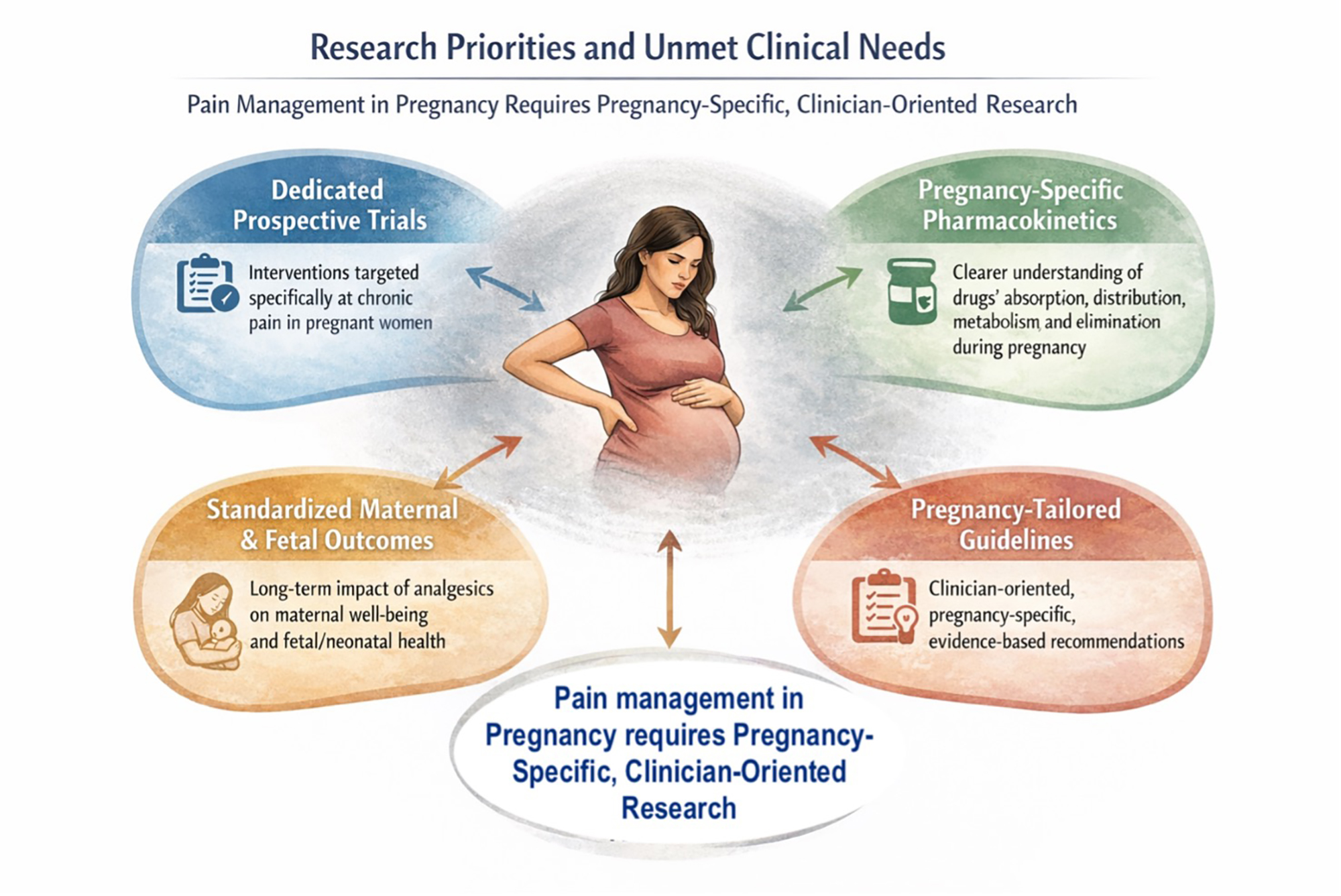
Conclusions. Treatment of chronic pain during pregnancy remains an area with limited evidence. There is an urgent need for prospective studies, standardized maternal and fetal outcome measures, and pregnancy-specific, clinician-focused guidelines to promote safer and more personalized pain management.

Downloads
How to Cite

This work is licensed under a Creative Commons Attribution-NonCommercial 4.0 International License.
PAGEPress has chosen to apply the Creative Commons Attribution NonCommercial 4.0 International License (CC BY-NC 4.0) to all manuscripts to be published.