
 https://doi.org/10.4081/ahr.2026.150
PAIN AS A NEUROCARDIAC STRESSOR: REFRAMING PAIN BEYOND NOCICEPTION
C. Angeletti1, G. Di Giuseppe1, I. Olivieri1, G. Varrassi2 | 1Department of Anaesthesia, Intensive Care and Pain Medicine, Mazzini Hospital, Teramo, Italy; 2Fondazione Paolo Procacci, Rome, Italy
All claims expressed in this article are solely those of the authors and do not necessarily represent those of their affiliated organizations, or those of the publisher, the editors and the reviewers. Any product that may be evaluated in this article or claim that may be made by its manufacturer is not guaranteed or endorsed by the publisher.
Published: 6 May 2026
Background and Aims. Pain is usually considered a sensory and emotional experience. However, growing evidence shows that pain also triggers integrated neuroendocrine and autonomic responses with broad effects. Through the brain–heart axis, both acute and chronic pain can act as biological stressors that impact cardiovascular health, regardless of how pain is perceived. The aim is to develop a clinically focused conceptual framework that describes pain as a neurocardiac stressor and highlights its possible role as a systemic disease modifier.
Methods. We conducted a narrative, mechanism-focused synthesis of current evidence on pain-related activation of the hypothalamic–pituitary–adrenal (HPA) axis, autonomic imbalance, and downstream cardiovascular effects, with an emphasis on clinically relevant pathways.
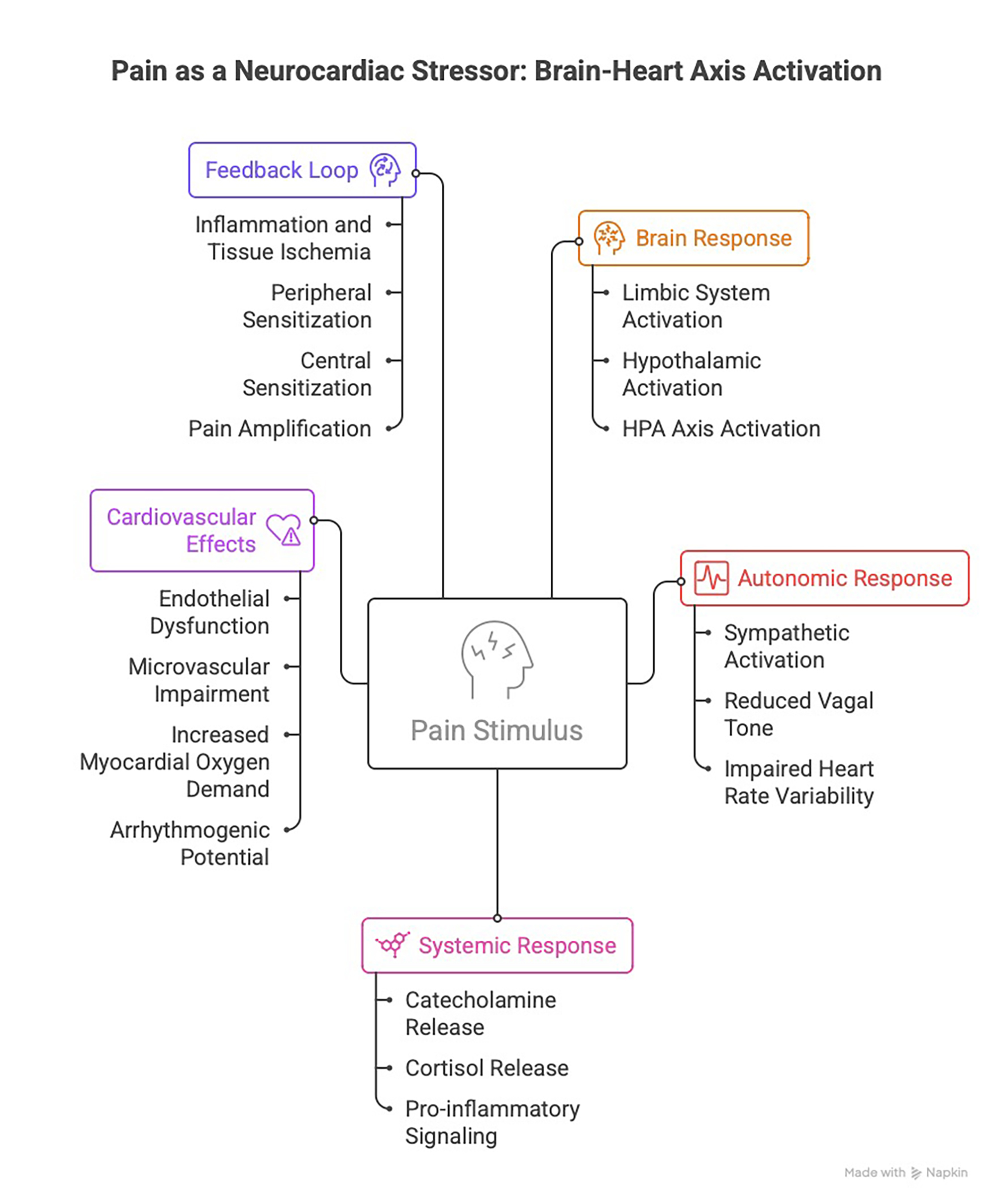
Results. Pain triggers a coordinated stress response involving activation of the limbic system, hypothalamic signaling, and engagement of the HPA axis, resulting in cortisol release and dominance of sympathetic activity. This autonomic imbalance is linked to decreased vagal tone, reduced heart rate variability, and elevated catecholamine levels. The downstream effects include endothelial dysfunction, microvascular impairment, pro-inflammatory signaling, and increased myocardial oxygen demand. These mechanisms may contribute to arrhythmogenic vulnerability, hemodynamic instability, and stress-related cardiomyopathy. Importantly, persistent pain can sustain these pathways over time, indicating a role as a chronic systemic stressor.
Conclusions. Pain should be viewed as more than just a symptom; it acts as a neurocardiac stressor with possible systemic effects. Incorporating pain assessment into cardiovascular risk evaluation and adopting a brain–heart approach could lead to new opportunities in both clinical management and translational research.
Downloads
How to Cite

This work is licensed under a Creative Commons Attribution-NonCommercial 4.0 International License.
PAGEPress has chosen to apply the Creative Commons Attribution NonCommercial 4.0 International License (CC BY-NC 4.0) to all manuscripts to be published.