
 https://doi.org/10.4081/ahr.2026.139
Reframing chronic pain through the microbiota-gut-brain axis: from mechanisms to clinical meaning
All claims expressed in this article are solely those of the authors and do not necessarily represent those of their affiliated organizations, or those of the publisher, the editors and the reviewers. Any product that may be evaluated in this article or claim that may be made by its manufacturer is not guaranteed or endorsed by the publisher.
Published: 4 June 2026
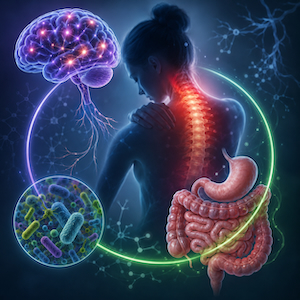
Chronic pain is increasingly accepted in the scientific literature as a multidimensional disorder shaped by dynamic interactions between peripheral tissues, the nervous system, and immune pathways, rather than as a direct consequence of structural pathology alone. Within this evolving framework, the microbiota-gut-brain axis has emerged as a compelling systems-level model capable of integrating nociceptive, neuropathic, and nociplastic mechanisms into a unified biological context. This narrative review reframes chronic pain through this axis, synthesizing current evidence on how gut microbial ecosystems influence pain processing via interconnected epithelial, immune, neural, and neuroendocrine pathways. We examine key mechanistic domains, including intestinal barrier integrity, microbial-derived metabolites such as short-chain fatty acids and tryptophan products, vagal and autonomic signaling, hypothalamic-pituitary-adrenal axis modulation, and neuroimmune reprogramming involving glial and peripheral immune cells. These pathways converge to modulate nociceptor sensitivity, central sensitization, and symptom clusters frequently accompanying chronic pain, including fatigue, mood disturbance, and bowel dysfunction. Evidence from human observational studies, translational experiments, Mendelian randomization analyses, and early interventional trials suggest that microbiota-related alterations are not merely epiphenomenal but may contribute to pain vulnerability and persistence across selected phenotypes, with the most consistent and clinically supported evidence observed in visceral pain disorders such as irritable bowel syndrome, while evidence in other conditions, including fibromyalgia, neuropathic pain, and cancer-related pain, remains more heterogeneous or predominantly translational. Despite growing mechanistic plausibility, clinical translation remains constrained by heterogeneity in study design, inconsistent microbial signatures, and limited high-quality interventional data. Accordingly, we propose a pragmatic interpretation for clinicians, emphasizing microbiome-informed adjunctive strategies within multimodal pain management rather than standalone therapeutic approaches. The microbiota-gut-brain axis should therefore be viewed not as a discrete target, but as a regulatory network that refines our understanding of chronic pain complexity and opens avenues for personalized, systems-based care.
Downloads
1. Kosek E, Clauw D, Nijs J, et al. Chronic nociplastic pain affecting the musculoskeletal system: clinical criteria and grading system. Pain 2021;162:2629-34. DOI: https://doi.org/10.1097/j.pain.0000000000002324
2. Nijs J, Lahousse A, Kapreli E, et al. Nociplastic pain criteria or recognition of central sensitization? Pain phenotyping in the past, present and future. J Clin Med 2021;10:3203. DOI: https://doi.org/10.3390/jcm10153203
3. Fitzcharles MA, Cohen SP, Clauw DJ, et al. Nociplastic pain: towards an understanding of prevalent pain conditions. Lancet 2021;397:2098-110. DOI: https://doi.org/10.1016/S0140-6736(21)00392-5
4. Mayer EA, Tillisch K. The brain-gut axis in abdominal pain syndromes. Annu Rev Med 2011;62:381-96. DOI: https://doi.org/10.1146/annurev-med-012309-103958
5. Mayer EA, Tillisch K, Gupta A. Gut/brain axis and the microbiota. J Clin Invest 2015;125:926-38. DOI: https://doi.org/10.1172/JCI76304
6. Cryan JF, O’Riordan KJ, Cowan CSM, et al. The microbiota-gut-brain axis. Physiol Rev 2019;99:1877-2013. DOI: https://doi.org/10.1152/physrev.00018.2018
7. Guo R, Chen LH, Xing C, Liu T. Pain regulation by gut microbiota: molecular mechanisms and therapeutic potential. Br J Anaesth 2019;123:637-54. DOI: https://doi.org/10.1016/j.bja.2019.07.026
8. Ho T, Elma Ö, Kocanda L, et al. The brain-gut axis and chronic pain: mechanisms and therapeutic opportunities. Front Neurosci 2025;19:1545997. DOI: https://doi.org/10.3389/fnins.2025.1545997
9. Goudman L, Demuyser T, Pilitsis JG, et al. Gut dysbiosis in patients with chronic pain: a systematic review and meta-analysis. Front Immunol 2024;15:1342833. DOI: https://doi.org/10.3389/fimmu.2024.1342833
10. Lou L, Zhou L, Wang Y. Gut microbiota: a modulator and therapeutic target for chronic pain. Mol Neurobiol 2025;62:5875-90. DOI: https://doi.org/10.1007/s12035-024-04663-x
11. Corriero A, Giglio M, Inchingolo F, et al. Gut Microbiota modulation and its implications on neuropathic pain: a comprehensive literature review. Pain Ther 2024;13:33-51. DOI: https://doi.org/10.1007/s40122-023-00565-3
12. Leong PY, Shi LH. Gut microbiota in adults with chronic widespread pain: a systematic review. Diseases 2025;13:299. DOI: https://doi.org/10.3390/diseases13090299
13. Cai Y, Wen S, Hu J, et al. Multiple reports on the causal relationship between various chronic pain and gut microbiota: a two-sample Mendelian randomization study. Front Neurosci 2024;18:1369996. DOI: https://doi.org/10.3389/fnins.2024.1369996
14. Xiao QA, Qin L, Yu J, et al. The causality between gut microbiome and chronic regional pain: a Mendelian randomization analysis. Front Microbiol 2024;15:1329521. DOI: https://doi.org/10.3389/fmicb.2024.1329521
15. Wang Z, Jiang D, Zhang M, et al. Causal association between gut microbiota and fibromyalgia: a Mendelian randomization study. Front Microbiol 2023;14:1305361. DOI: https://doi.org/10.3389/fmicb.2023.1268935
16. Cai W, Haddad M, Haddad R, et al. The gut microbiota promotes pain in fibromyalgia. Neuron 2025;113:2161-75. DOI: https://doi.org/10.1016/j.neuron.2025.03.032
17. Baethge C, Goldbeck-Wood S, Mertens S. SANRA - a scale for the quality assessment of narrative review articles. Res Integr Peer Rev 2019;4:5. DOI: https://doi.org/10.1186/s41073-019-0064-8
18. Boccella S, Guida F, De Logu F, et al. Ketones and pain: unexplored role of hydroxyl carboxylic acid receptor type 2 in the pathophysiology of neuropathic pain. FASEB J 2019;33:1062-73. DOI: https://doi.org/10.1096/fj.201801033R
19. Testai L, Guida F, Salerno S, et al. Hydroxyl carboxylic acid receptor-2 (HCAR2) as a potential target in neurometabolic diseases. Pharmacol Ther 2025;274:108909. DOI: https://doi.org/10.1016/j.pharmthera.2025.108909
20. Varrassi G, Paladini A, Tran YV, et al. Advances in the pathophysiology and management of cancer pain: a scoping review. Cancers 2026;18:259. DOI: https://doi.org/10.3390/cancers18020259
21. Taing K, Chen L, Weng HR. Emerging roles of GPR109A in regulation of neuroinflammation in neurological diseases and pain. Neural Regen Res 2023;18:763. DOI: https://doi.org/10.4103/1673-5374.354514
22. Crock LW, Rodgers R, Huck NA, et al. Chronic pain and complex regional pain syndrome are associated with alterations to the intestinal microbiota in both humans and mice. An observational cross-sectional study. Neurobiol Pain 2024;16:100173. DOI: https://doi.org/10.1016/j.ynpai.2024.100173
23. Vanneste S, Castejón-España J, Arulchelvan E, De Ridder D. Disentangling sex-specific mechanisms in neuropathic and nociplastic chronic pain: a review. Front Neurol 2026;16:1730291. DOI: https://doi.org/10.3389/fneur.2025.1730291
24. O’Mahony SM, McVey Neufeld K, Waworuntu RV, et al. The enduring effects of early‐life stress on the microbiota–gut–brain axis are buffered by dietary supplementation with milk fat globule membrane and a prebiotic blend. Eur J Neurosci 2020;51:1042-58. DOI: https://doi.org/10.1111/ejn.14514
25. Agusti A, Lamers F, Tamayo M, et al. The gut microbiome in early life stress: a systematic review. Nutrients 2023;15:2566. DOI: https://doi.org/10.3390/nu15112566
26. Paik D, Yao L, Zhang Y, et al. Human gut bacteria produce ΤΗ17-modulating bile acid metabolites. Nature 2022;603:907-12. DOI: https://doi.org/10.1038/s41586-022-04480-z
27. Hang S, Paik D, Yao L, et al. Bile acid metabolites control TH17 and Treg cell differentiation. Nature 2019;576:143-8. DOI: https://doi.org/10.1038/s41586-019-1785-z
28. Alemi F, Kwon E, Poole DP, et al. The TGR5 receptor mediates bile acid–induced itch and analgesia. J Clin Invest 2013;123:1513-30. DOI: https://doi.org/10.1172/JCI64551
29. Pane K, Boccella S, Guida F, et al. Role of gut microbiota in neuropathy and neuropathic pain states: A systematic preclinical review. Neurobiol Dis 2022;170:105773. DOI: https://doi.org/10.1016/j.nbd.2022.105773
30. Moyseos M, Michael J, Ferreira N, Sophocleous A. The effect of probiotics on the management of pain and inflammation in osteoarthritis: a systematic review and meta-analysis of clinical studies. Nutrients 2024;16:2243. DOI: https://doi.org/10.3390/nu16142243
31. Ramakrishna C, Corleto J, Ruegger PM, et al. Dominant role of the gut microbiota in chemotherapy induced neuropathic pain. Sci Rep 2019;9:20324. DOI: https://doi.org/10.1038/s41598-019-56832-x
32. Dutta RK, Abu YF, Tao J, et al. Altered gut microbiome drives heightened pain sensitivity in a murine model of metastatic triple-negative breast cancer. Am J Cancer Res 2024;14:274-99. DOI: https://doi.org/10.62347/LUJF9626
33. Zhang L, Meng J, Ban Y, et al. Morphine tolerance is attenuated in germfree mice and reversed by probiotics, implicating the role of gut microbiome. Proc Natl Acad Sci USA 2019;116:13523-32. DOI: https://doi.org/10.1073/pnas.1901182116
34. Wang H, Luo J, Chen X, et al. Clinical observation of the effects of oral opioid on inflammatory cytokines and gut microbiota in patients with moderate to severe cancer pain: a retrospective cohort study. Pain Ther 2022;11:667-81. DOI: https://doi.org/10.1007/s40122-022-00386-w
35. Kolli U, Jalodia R, Moidunny S, et al. Multi-omics analysis revealing the interplay between gut microbiome and the host following opioid use. Gut Microbes 2023;15:2246184. DOI: https://doi.org/10.1080/19490976.2023.2246184
36. Fang H, Hou Q, Zhang W, et al. Fecal microbiota transplantation improves clinical symptoms of fibromyalgia: an open-label, randomized, nonplacebo-controlled study. J Pain 2024;25:104535. DOI: https://doi.org/10.1016/j.jpain.2024.104535
37. Martín Pérez SE, Abdel Lah HAL, García NH, et al. Effectiveness of fecal microbiota transplantation in nociplastic pain management: a systematic review. Gastrointest Disord 2025;7:5. DOI: https://doi.org/10.3390/gidisord7010005
38. Tanaka M, Nakayama J. Development of the gut microbiota in infancy and its impact on health in later life. Allergol Int 2017;66:515-22. DOI: https://doi.org/10.1016/j.alit.2017.07.010
39. Gacesa R, Kurilshikov A, Vich Vila A, et al. Environmental factors shaping the gut microbiome in a Dutch population. Nature 2022;604:732-9. DOI: https://doi.org/10.1038/s41586-022-04567-7
40. Aslan Çİn NN, Açik M, Tertemİz OF, et al. Effect of prebiotic and probiotic supplementation on reduced pain in patients with fibromyalgia syndrome: a double-blind, placebo-controlled randomized clinical trial. Psychol Health Med 2024;29:528-41. DOI: https://doi.org/10.1080/13548506.2023.2216464
41. Calandre EP, Hidalgo-Tallon J, Molina-Barea R, et al. The probiotic VSL#3® does not seem to be efficacious for the treatment of gastrointestinal symptomatology of patients with fibromyalgia: a randomized, double-blind, placebo-controlled clinical trial. Pharmaceuticals 2021;14:1063. DOI: https://doi.org/10.3390/ph14101063
42. Cardona D, Roman P, Cañadas F, Sánchez-Labraca N. The effect of multiprobiotics on memory and attention in fibromyalgia: a pilot randomized controlled trial. Int J Environ Res Public Health 2021;18:3543. DOI: https://doi.org/10.3390/ijerph18073543
43. Roman P, Estévez AF, Miras A, et al. A pilot randomized controlled trial to explore cognitive and emotional effects of probiotics in fibromyalgia. Sci Rep 2018;8:10965. DOI: https://doi.org/10.1038/s41598-018-29388-5
44. U.S. Food and Drug Administration [Internet]. Update to March 12, 2020 safety alert regarding use of fecal microbiota for transplantation and risk of serious adverse events likely due to transmission of pathogenic organisms. 2020; Accessed: 2026 Mar 26. Available from: https://www.fda.gov/vaccines-blood-biologics/safety-availability-biologics/update-march-12-2020-safety-alert-regarding-use-fecal-microbiota-transplantation-and-risk-serious
45. U.S. Food and Drug Administration [Internet]. Fecal microbiota products. 2023; Accessed: 2026 Mar 26. Available from: https://www.fda.gov/vaccines-blood-biologics/fecal-microbiota-products
46. Morace AM, Ricciardi F, Perrone M, et al. Hydroxyl carboxylic acid receptor-2 modulation as an emerging pathway for chronic pain management. Neural Regen Res 2026. Online Ahead of Print. DOI: https://doi.org/10.4103/NRR.NRR-D-25-01691
How to Cite

This work is licensed under a Creative Commons Attribution-NonCommercial 4.0 International License.
PAGEPress has chosen to apply the Creative Commons Attribution NonCommercial 4.0 International License (CC BY-NC 4.0) to all manuscripts to be published.