
 https://doi.org/10.4081/ahr.2026.135
Therapeutic target for reversal of overdose-induced respiratory depression: BK channels in the carotid body
All claims expressed in this article are solely those of the authors and do not necessarily represent those of their affiliated organizations, or those of the publisher, the editors and the reviewers. Any product that may be evaluated in this article or claim that may be made by its manufacturer is not guaranteed or endorsed by the publisher.
Published: 5 June 2026
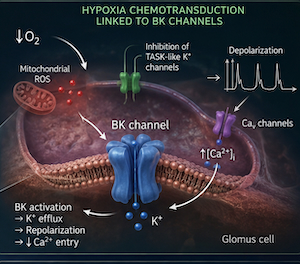
Opioid-overdose has morphed from a mainly single-entity problem (e.g., heroin, or fentanyl, or some other opioid) to a predominantly polysubstance combination of opioid + non-opioid problem. Reversal of opioid-alone respiratory depression is straightforward (albeit not always easy) using an opioid receptor antagonist such as naloxone. Unfortunately, combinations containing non-opioid contributors to respiratory depression are not so pharmacologically straightforward. Given that the non-opioid component is often not known, a reversal agent that would work independently of the combination components (‘agnostic’) is highly desired. A promising target for such a drug is the peripherally-located carotid body, the primary peripheral arterial chemoreceptor that detects arterial hypoxia and responds with compensatory signals. Large-conductance Ca²⁺- and voltage-activated potassium channels (BK, Maxi-K, KCa1.1) within the glomus cells regulate the response of the carotid body to hypoxia, and the gain and stability of the respiratory feedback loop. Hypoxia inhibits BK channels via direct and indirect mechanisms, enhancing the gain of signaling from the carotid body to brainstem respiratory nuclei. Although initially proposed to be intrinsic oxygen sensors, current evidence supports a more integrative role in modulatory control of carotid body activity. This minireview gives a succinct overview of the molecular biology and structural diversity of BK channels and their accessory β/g subunits, the physiological mechanisms linking BK channel activity to hypoxia chemotransduction, and systems-level roles in negative-feedback drive of ventilatory responsiveness. Also included are future directions and a proposed control system model of carotid body BK feedback.
Downloads
1. Martin WR. Opioid antagonists. Pharmacol Rev 1967;19:463-521. DOI: https://doi.org/10.1016/S0031-6997(25)07161-3
2. Kolbe L, Fins JJ. The birth of naloxone: an intellectual history of an ambivalent opioid. Camb Q Healthc Ethics 2021;30:637-50. DOI: https://doi.org/10.1017/S0963180121000116
3. Raffa RB, Pergolizzi JV Jr, LeQuang JA, et al. The fentanyl family: a distinguished medical history tainted by abuse. J Clin Pharm Ther 2018;43:154-8. DOI: https://doi.org/10.1111/jcpt.12640
4. Pergolizzi JV Jr, Dahan A, LeQuang JA, Raffa RB. The conundrum of polysubstance overdose. J Clin Pharm Ther 2021;46:1189-93. DOI: https://doi.org/10.1111/jcpt.13362
5. Peppin JF, Raffa RB, Schatman ME. The polysubstance overdose-death crisis. J Pain Res 2020;13:3405-8. DOI: https://doi.org/10.2147/JPR.S295715
6. Dahan A, Franko TS, Carroll JW, et al. Fact vs. fiction: naloxone in the treatment of opioid-induced respiratory depression in the current era of synthetic opioids. Front Public Health 2024;12:1346109. DOI: https://doi.org/10.3389/fpubh.2024.1346109
7. van Lemmen M, van der Schrier R, Dahan A, van Velzen M, Sarton E, Niesters M. Pharmacology of viable mechanism agnostic respiratory stimulants for the reversal of drug-induced respiratory depression in humans. Expert Opin Drug Metab Toxicol 2023;19:671-9. DOI: https://doi.org/10.1080/17425255.2023.2262386
8. Peppin JF, Pergolizzi JV Jr, Fudin J, Meyer TA, Raffa RB. History of respiratory stimulants. J Pain Res 2021;14:1043-9. DOI: https://doi.org/10.2147/JPR.S298607
9. Bee D, Howard P. The carotid body: a review of its anatomy, physiology and clinical importance. Monaldi Arch Chest Dis 1993;48:48-53.
10. Biscoe TJ. Carotid body: structure and function. Physiol Rev 1971;51:437-95. DOI: https://doi.org/10.1152/physrev.1971.51.3.437
11. Chang AJ. Acute oxygen sensing by the carotid body: from mitochondria to plasma membrane. J Appl Physiol (1985) 2017;123:1335-43. DOI: https://doi.org/10.1152/japplphysiol.00398.2017
12. Verna A. Ultrastructure of the carotid body in the mammals. Int Rev Cytol 1979;60:271-330. DOI: https://doi.org/10.1016/S0074-7696(08)61265-6
13. Lopez-Barneo J. Neurobiology of the carotid body. Handb Clin Neurol 2022;188:73-102. DOI: https://doi.org/10.1016/B978-0-323-91534-2.00010-2
14. Ortega-Sáenz P, Lopez-Barneo J. Physiology of the carotid body: from molecules to disease. Annu Rev Physiol 2020;82:127-49. DOI: https://doi.org/10.1146/annurev-physiol-020518-114427
15. Iturriaga R, Alcayaga J, Chapleau MW, Somers VK. Carotid body chemoreceptors: physiology, pathology, and implications for health and disease. Physiol Rev 2021;101:1177-235. DOI: https://doi.org/10.1152/physrev.00039.2019
16. Kay JM, Laidler P. Hypoxia and the carotid body. J Clin Pathol Suppl (R Coll Pathol) 1977;11:30-44. DOI: https://doi.org/10.1136/jcp.s3-11.1.30
17. Prabhakar NR, Peng YJ. Oxygen sensing by the carotid body: past and present. Adv Exp Med Biol.2017;977:3-8. DOI: https://doi.org/10.1007/978-3-319-55231-6_1
18. Guyenet PG. Regulation of breathing and autonomic outflows by chemoreceptors. Compr Physiol 2014;4:1511-62. DOI: https://doi.org/10.1002/j.2040-4603.2014.tb00589.x
19. Prabhakar NR. Oxygen sensing by the carotid body chemoreceptors. J Appl Physiol (1985) 2000;88:2287-95. DOI: https://doi.org/10.1152/jappl.2000.88.6.2287
20. Gronblad M. Function and structure of the carotid body. Med Biol 1983;61:229-48.
21. Gao L, Moreno-Dominguez A, Ortega-Saenz P, Lopez-Barneo J. The carotid body oxygen sensor. Curr Opin Neurobiol 2025;92:103022. DOI: https://doi.org/10.1016/j.conb.2025.103022
22. Zoccal DB, Vieira BN, Mendes LR, Evangelista AB, Leirao IP. Hypoxia sensing in the body: an update on the peripheral and central mechanisms. Exp Physiol 2024;109:461-9. DOI: https://doi.org/10.1113/EP091206
23. Prabhakar NR, Peng YJ, Nanduri J. Recent advances in understanding the physiology of hypoxic sensing by the carotid body. F1000Res 2018;7:1900. DOI: https://doi.org/10.12688/f1000research.16247.1
24. Prabhakar NR, Semenza GL. Regulation of carotid body oxygen sensing by hypoxia-inducible factors. Pflugers Arch 2016;468:71-5. DOI: https://doi.org/10.1007/s00424-015-1719-z
25. Olson LG, Saunders NA. Structure and function of the carotid body. Aust N Z J Med 1985;15:775-81.
26. Yang H, Zhang G, Cui J. BK channels: multiple sensors, one activation gate. Front Physiol 2015;6:29. DOI: https://doi.org/10.3389/fphys.2015.00029
27. Porzionato A, Macchi V, Stecco C, De Caro R. The carotid sinus nerve — structure, function, and clinical implications. Anat Rec (Hoboken).2019;302:575-87. DOI: https://doi.org/10.1002/ar.23829
28. Piskuric NA, Nurse CA. Expanding role of ATP as a versatile messenger at carotid and aortic body chemoreceptors. J Physiol 2013;591:415-22. DOI: https://doi.org/10.1113/jphysiol.2012.234377
29. Gonzalez C, Almaraz L, Obeso A, Rigual R. Oxygen and acid chemoreception in the carotid body chemoreceptors. Trends Neurosci 1992;15:146-53. DOI: https://doi.org/10.1016/0166-2236(92)90357-E
30. Peers C. Ionic channels in type I carotid body cells. Adv Exp Med Biol 1994;360:29-40. DOI: https://doi.org/10.1007/978-1-4615-2572-1_4
31. Conde SV, Monteiro EC, Sacramento JF. Purines and carotid body: new roles in pathological conditions. Front Pharmacol 2017;8:913. DOI: https://doi.org/10.3389/fphar.2017.00913
32. Wang J, Kim D. Activation of voltage-dependent K(+) channels strongly limits hypoxia-induced elevation of [Ca(2+)]i in rat carotid body glomus cells. J Physiol.2018;596:3119-36. DOI: https://doi.org/10.1113/JP275275
33. Pichard LE, Crainiceanu CM, Pashai P, et al. Role of BK channels in murine carotid body neural responses in vivo. Adv Exp Med Biol 2015;860:325-33. DOI: https://doi.org/10.1007/978-3-319-18440-1_37
34. Gomez-Nino A, Obeso A, Baranda JA, et al. MaxiK potassium channels in the function of chemoreceptor cells of the rat carotid body. Am J Physiol Cell Physiol 2009;297:C715-22. DOI: https://doi.org/10.1152/ajpcell.00507.2008
35. Donnelly DF, Kim I, Yang D, Carroll JL. Role of MaxiK-type calcium dependent K+ channels in rat carotid body hypoxia transduction during postnatal development. Respir Physiol Neurobiol 2011;177:1-8. DOI: https://doi.org/10.1016/j.resp.2011.02.010
36. Zoccal DB, Furuya WI, Bassi M, et al. The nucleus of the solitary tract and the coordination of respiratory and sympathetic activities. Front Physiol. 2014;5:238. DOI: https://doi.org/10.3389/fphys.2014.00238
37. Munoz-Ortiz J, Munoz-Ortiz E, Lopez-Meraz ML, et al. Pre-Bötzinger complex: generation and modulation of respiratory rhythm. Neurologia (Engl Ed) 2019;34:461-8. DOI: https://doi.org/10.1016/j.nrleng.2018.05.006
38. Buckler KJ, Vaughan-Jones RD. Role of intracellular pH and [Ca2+]i in acid chemoreception in type-I cells of the carotid body. Adv Exp Med Biol 1994;360:41-55. DOI: https://doi.org/10.1007/978-1-4615-2572-1_5
39. Rakoczy RJ, Schiebrel CM, Wyatt CN. Acute oxygen-sensing via mitochondria-generated temperature transients in rat carotid body type I cells. Front Physiol.2022;13:874039. DOI: https://doi.org/10.3389/fphys.2022.874039
40. Ochoa SV, Otero L, Aristizabal-Pachon AF, et al. Hypoxic regulation of the large-conductance, calcium and voltage-activated potassium channel, BK. Front Physiol 2021;12:780206. DOI: https://doi.org/10.3389/fphys.2021.780206
41. Liu G, Zakharov SI, Yang L, et al. Position and role of the BK channel alpha subunit S0 helix inferred from disulfide crosslinking. J Gen Physiol 2008;131:537-48. DOI: https://doi.org/10.1085/jgp.200809968
42. Shipston MJ. Alternative splicing of potassium channels: a dynamic switch of cellular excitability. Trends Cell Biol 2001;11:353-8. DOI: https://doi.org/10.1016/S0962-8924(01)02068-2
43. Chen L, Shipston MJ. Cloning of potassium channel splice variants from tissues and cells. Methods Mol Biol 2008;491:35-60. DOI: https://doi.org/10.1007/978-1-59745-526-8_3
44. Zhang J, Yan J. Regulation of BK channels by auxiliary gamma subunits. Front Physiol 2014;5:401. DOI: https://doi.org/10.3389/fphys.2014.00401
45. Macias D, Cowburn AS, Torres-Torrelo H, et al. HIF-2alpha is essential for carotid body development and function. Elife 2018;7:e34681. DOI: https://doi.org/10.7554/eLife.38781
46. Ortega-Sáenz P, Moreno-Dominguez A, Gao L, Lopez-Barneo J. Molecular mechanisms of acute oxygen sensing by arterial chemoreceptor cells. Role of HIF2alpha. Front Physiol 2020;11:614893. DOI: https://doi.org/10.3389/fphys.2020.614893
47. Fung ML. Pathogenic roles of the carotid body inflammation in sleep apnea. Mediators Inflamm 2014;2014:354279. DOI: https://doi.org/10.1155/2014/354279
48. Ross FA, Rafferty JN, Dallas ML, et al. Selective expression in carotid body type I cells of a single splice variant of the large conductance calcium- and voltage-activated potassium channel confers regulation by AMP-activated protein kinase. J Biol Chem 2011;286:11929-36. DOI: https://doi.org/10.1074/jbc.M110.189779
49. Pardal R, López-Barneo J. Carotid body thin slices: responses of glomus cells to hypoxia and K(+)-channel blockers. Respir Physiol Neurobiol 2002;132:69-79. DOI: https://doi.org/10.1016/S1569-9048(02)00050-2
50. Latorre R, Castillo K, Carrasquel-Ursulaez W, et al. Molecular determinants of BK channel functional diversity and functioning. Physiol Rev.2017;97:39-87. DOI: https://doi.org/10.1152/physrev.00001.2016
51. Ecaterina S, Hodor D, Sall IM, et al. Comparative exploration of the carotid body in domestic animals: morphology, physiology, histology, and pathology. Front Vet Sci 2024;11:1409701. DOI: https://doi.org/10.3389/fvets.2024.1409701
52. Otsubo T, Kostuk EW, Balbir A, et al. Differential expression of large-conductance Ca-activated K channels in the carotid body between DBA/2J and A/J strains of mice. Front Cell Neurosci 2011;5:19. DOI: https://doi.org/10.3389/fncel.2011.00019
53. Hartness ME, Brazier SP, Peers C, et al. Post-transcriptional control of human maxiK potassium channel activity and acute oxygen sensitivity by chronic hypoxia. J Biol Chem 2003;278:51422-32. DOI: https://doi.org/10.1074/jbc.M309463200
54. Wang B, Rothberg BS, Brenner R. Mechanism of beta4 subunit modulation of BK channels. J Gen Physiol 2006;127:449-65. DOI: https://doi.org/10.1085/jgp.200509436
55. Gonzalez-Perez V, Lingle CJ. Regulation of BK channels by beta and gamma subunits. Annu Rev Physiol 2019;81:113-37. DOI: https://doi.org/10.1146/annurev-physiol-022516-034038
56. Prabhakar NR, Peers C. Gasotransmitter regulation of ion channels: a key step in O2 sensing by the carotid body. Physiology (Bethesda) 2014;29:49-57. DOI: https://doi.org/10.1152/physiol.00034.2013
57. Prabhakar NR. Hydrogen sulfide (H(2)S): a physiologic mediator of carotid body response to hypoxia. Adv Exp Med Biol 2012;758:109-13. DOI: https://doi.org/10.1007/978-94-007-4584-1_15
58. Olson KR. A case for hydrogen sulfide metabolism as an oxygen sensing mechanism. Antioxidants (Basel) 2021;10:1650. DOI: https://doi.org/10.3390/antiox10111650
59. Prieto-Lloret J, Aaronson PI. Hydrogen sulfide as an O(2) sensor: a critical analysis. Adv Exp Med Biol 2017;967:261-76. DOI: https://doi.org/10.1007/978-3-319-63245-2_15
60. Olson KR. Hydrogen sulfide as an oxygen sensor. Antioxid Redox Signal 2015;22:377-97. DOI: https://doi.org/10.1089/ars.2014.5930
61. Peers C, Wyatt CN. The role of maxiK channels in carotid body chemotransduction. Respir Physiol Neurobiol 2007;157:75-82. DOI: https://doi.org/10.1016/j.resp.2006.10.010
62. Riesco-Fagundo AM, Perez-Garcia MT, Gonzalez C, Lopez-Lopez JR. O(2) modulates large-conductance Ca(2+)-dependent K(+) channels of rat chemoreceptor cells by a membrane-restricted and CO-sensitive mechanism. Circ Res 2001;89:430-6. DOI: https://doi.org/10.1161/hh1701.095632
63. Lopez-Lopez JR, Gonzalez C, Perez-Garcia MT. Properties of ionic currents from isolated adult rat carotid body chemoreceptor cells: effect of hypoxia. J Physiol.1997;499:429-41. DOI: https://doi.org/10.1113/jphysiol.1997.sp021939
64. Barak P, Parekh AB. Signaling through Ca(2+) microdomains from store-operated CRAC channels. Cold Spring Harb Perspect Biol 2020;12:a035097. DOI: https://doi.org/10.1101/cshperspect.a035097
65. Peña F, Ramirez JM. Hypoxia-induced changes in neuronal network properties. Mol Neurobiol 2005;32:251-83. DOI: https://doi.org/10.1385/MN:32:3:251
66. Marcantoni A, Vandael DH, Mahapatra S, et al. Loss of Cav1.3 channels reveals the critical role of L-type and BK channel coupling in pacemaking mouse adrenal chromaffin cells. J Neurosci 2010;30:491-504. DOI: https://doi.org/10.1523/JNEUROSCI.4961-09.2010
67. Lopez-Lopez J, Gonzalez C, Urena J, Lopez-Barneo J. Low pO2 selectively inhibits K channel activity in chemoreceptor cells of the mammalian carotid body. J Gen Physiol 1989;93:1001-15. DOI: https://doi.org/10.1085/jgp.93.5.1001
68. Buckler KJ. A novel oxygen-sensitive potassium current in rat carotid body type I cells. J Physiol 1997;498:649-62. DOI: https://doi.org/10.1113/jphysiol.1997.sp021890
69. Buckler KJ, Vaughan-Jones RD. Effects of hypercapnia on membrane potential and intracellular calcium in rat carotid body type I cells. J Physiol 1994;478:157-71. DOI: https://doi.org/10.1113/jphysiol.1994.sp020239
70. Buckler KJ, Vaughan-Jones RD. Effects of hypoxia on membrane potential and intracellular calcium in rat neonatal carotid body type I cells. J Physiol.1994;476:423-8. DOI: https://doi.org/10.1113/jphysiol.1994.sp020143
71. Holmes AP, Ray CJ, Coney AM, Kumar P. Is carotid body physiological O(2) sensitivity determined by a unique mitochondrial phenotype? Front Physiol.2018;9:562. DOI: https://doi.org/10.3389/fphys.2018.00562
72. Papreck JR, Martin EA, Lazzarini P, et al. Modulation of K2P3.1 (TASK-1), K2P9.1 (TASK-3), and TASK-1/3 heteromer by reactive oxygen species. Pflugers Arch 2012;464:471-80. DOI: https://doi.org/10.1007/s00424-012-1159-y
73. Prabhakar NR, Peng YJ, Yuan G, Nanduri J. Reactive oxygen radicals and gaseous transmitters in carotid body activation by intermittent hypoxia. Cell Tissue Res 2018;372:427-31. DOI: https://doi.org/10.1007/s00441-018-2807-0
74. Iturriaga R, Diaz HS. Reactive oxidative species in carotid body chemoreception: their role in oxygen sensing and cardiorespiratory alterations induced by chronic intermittent hypoxia. Antioxidants (Basel) 2025;14:675. DOI: https://doi.org/10.3390/antiox14060675
75. Fernandez-Aguera MC, Gao L, Gonzalez-Rodriguez P, et al. Oxygen sensing by arterial chemoreceptors depends on mitochondrial complex I signaling. Cell Metab 2015;22:825-37. DOI: https://doi.org/10.1016/j.cmet.2015.09.004
76. Lopez-Barneo J, Ortega-Saenz P, Gonzalez-Rodriguez P, et al. Oxygen-sensing by arterial chemoreceptors: mechanisms and medical translation. Mol Aspects Med 2016;47-48:90-108. DOI: https://doi.org/10.1016/j.mam.2015.12.002
77. Williams SE, Wootton P, Mason HS, et al. Hemoxygenase-2 is an oxygen sensor for a calcium-sensitive potassium channel. Science. 2004;306:2093-7. DOI: https://doi.org/10.1126/science.1105010
78. Holmes AP, Swiderska A, Nathanael D, et al. Are multiple mitochondrial related signalling pathways involved in carotid body oxygen sensing? Front Physiol 2022;13:908617. DOI: https://doi.org/10.3389/fphys.2022.908617
79. Rakoczy RJ, Wyatt CN. Acute oxygen sensing by the carotid body: a rattlebag of molecular mechanisms. J Physiol 2018;596:2969-76. DOI: https://doi.org/10.1113/JP274351
80. Waypa GB, Chandel NS, Schumacker PT. Model for hypoxic pulmonary vasoconstriction involving mitochondrial oxygen sensing. Circ Res 2001;88:1259-66. DOI: https://doi.org/10.1161/hh1201.091960
81. Kemp PJ, Williams SE, Mason HS, et al. Functional proteomics of BK potassium channels: defining the acute oxygen sensor. Novartis Found Symp 2006;272:141-56. DOI: https://doi.org/10.1002/9780470035009.ch12
82. Perez-Garcia MT, Colinas O, Miguel-Velado E, et al. Characterization of the Kv channels of mouse carotid body chemoreceptor cells and their role in oxygen sensing. J Physiol 2004;557:457-71. DOI: https://doi.org/10.1113/jphysiol.2004.062281
83. Buckler KJ. TASK-like potassium channels and oxygen sensing in the carotid body. Respir Physiol Neurobiol 2007;157:55-64. DOI: https://doi.org/10.1016/j.resp.2007.02.013
84. Bond CT, Maylie J, Adelman JP. Small-conductance calcium-activated potassium channels. Ann N Y Acad Sci 1999;868:370-8. DOI: https://doi.org/10.1111/j.1749-6632.1999.tb11298.x
85. Tang XD, Xu R, Reynolds MF, et al. Haem can bind to and inhibit mammalian calcium-dependent Slo1 BK channels. Nature 2003;425:531-5. DOI: https://doi.org/10.1038/nature02003
86. Evans AM, Mahmoud AD, Moral-Sanz J, Hartmann S. The emerging role of AMPK in the regulation of breathing and oxygen supply. Biochem J. 2016;473:2561-72. DOI: https://doi.org/10.1042/BCJ20160002
87. Evans AM. AMPK breathing and oxygen supply. Respir Physiol Neurobiol 2019;265:112-20. DOI: https://doi.org/10.1016/j.resp.2018.08.011
88. Lin AY, Turnbull CD, Pandit JJ. The "TASK" of breathing: anesthetic relevance of background two-pore domain potassium channels as therapeutic targets for respiratory control. Anesth Analg 2025;140:1414-25. DOI: https://doi.org/10.1213/ANE.0000000000007365
89. Duchen MR, Biscoe TJ. Relative mitochondrial membrane potential and [Ca2+]i in type I cells isolated from the rabbit carotid body. J Physiol 1992;450:33-61. DOI: https://doi.org/10.1113/jphysiol.1992.sp019115
90. Jackson A, Nurse C. Dopaminergic properties of cultured rat carotid body chemoreceptors grown in normoxic and hypoxic environments. J Neurochem 1997;69:645-54. DOI: https://doi.org/10.1046/j.1471-4159.1997.69020645.x
91. Rey S, Corthorn J, Chacon C, Iturriaga R. Expression and immunolocalization of endothelin peptides and its receptors, ETA and ETB, in the carotid body exposed to chronic intermittent hypoxia. J Histochem Cytochem 2007;55:167-74. DOI: https://doi.org/10.1369/jhc.6A7079.2006
92. Prabhakar NR, Peng YJ, Nanduri J. Carotid body hypersensitivity in intermittent hypoxia and obstructive sleep apnoea. J Physiol 2023;601:5481-94. DOI: https://doi.org/10.1113/JP284111
93. Tafil-Klawe M, Trzebski A, Klawe J, Palko T. Augmented chemoreceptor reflex tonic drive in early human hypertension and in normotensive subjects with family background of hypertension. Acta Physiol Pol 1985;36:51-8.
94. Trzebski A, Tafil M, Zoltowski M, Przybylski J. Increased sensitivity of the arterial chemoreceptor drive in young men with mild hypertension. Cardiovasc Res 1982;16:163-72. DOI: https://doi.org/10.1093/cvr/16.3.163
95. Schultz HD, Marcus NJ, Del Rio R. Role of the carotid body in the pathophysiology of heart failure. Curr Hypertens Rep 2013;15:356-62. DOI: https://doi.org/10.1007/s11906-013-0368-x
96. Dahan A, Nieuwenhuijs D, Teppema L. Plasticity of central chemoreceptors: effect of bilateral carotid body resection on central CO2 sensitivity. PLoS Med 2007;4:e239. DOI: https://doi.org/10.1371/journal.pmed.0040239
97. Grodins FS, Gray JS, Schroeder KR, et al. Respiratory responses to CO2 inhalation; a theoretical study of a nonlinear biological regulator. J Appl Physiol 1954;7:283-308. DOI: https://doi.org/10.1152/jappl.1954.7.3.283
98. Cheng L, Ivanova O, Fan HH, Khoo MC. An integrative model of respiratory and cardiovascular control in sleep-disordered breathing. Respir Physiol Neurobiol 2010;174:4-28. DOI: https://doi.org/10.1016/j.resp.2010.06.001
99. Duffin J. A mathematical model of the chemoreflex control of ventilation. Respir Physiol 1972;15:277-301. DOI: https://doi.org/10.1016/0034-5687(72)90070-9
100. Middendorf T, Loeschcke HH. [Mathematical simulation of the respiratory system (author’s transl)].[Article in German]. J Math Biol 1976;3:149-77. DOI: https://doi.org/10.1007/BF00276203
101. Milhorn HT Jr, Benton R, Ross R, Guyton AC. A mathematical model of the human respiratory control system. Biophys J 1965;5:27-46. DOI: https://doi.org/10.1016/S0006-3495(65)86701-7
102. Ursino M, Magosso E, Avanzolini G. An integrated model of the human ventilatory control system: the response to hypoxia. Clin Physiol 2001;21:465-77. DOI: https://doi.org/10.1046/j.1365-2281.2001.00350.x
103. Virkki A, Polo O, Gyllenberg M, Aittokallio T. Can carotid body perfusion act as a respiratory controller? J Theor Biol 2007;249:737-48. DOI: https://doi.org/10.1016/j.jtbi.2007.09.010
104. Silva JM, Lewis DL. Nitric oxide enhances Ca(2+)-dependent K(+) channel activity in rat carotid body cells. Pflugers Arch 2002;443:671-5. DOI: https://doi.org/10.1007/s00424-001-0745-1
105. DiChiara TJ, Reinhart PH. Redox modulation of hslo Ca2+-activated K+ channels. J Neurosci 1997;17:4942-55. DOI: https://doi.org/10.1523/JNEUROSCI.17-13-04942.1997
106. Moya EA, Arias P, Varela C, et al. Intermittent hypoxia-induced carotid body chemosensory potentiation and hypertension are critically dependent on peroxynitrite formation. Oxid Med Cell Longev 2016;2016:9802136. DOI: https://doi.org/10.1155/2016/9802136
107. Dallas ML, Scragg JL, Wyatt CN, et al. Modulation of O(2) sensitive K(+) channels by AMP-activated protein kinase. Adv Exp Med Biol 2009;648:57-63. DOI: https://doi.org/10.1007/978-90-481-2259-2_6
108. Conde SV, Sacramento JF, Martins FO. Immunity and the carotid body: implications for metabolic diseases. Bioelectron Med 2020;6:24. DOI: https://doi.org/10.1186/s42234-020-00061-5
109. Semenza GL, Prabhakar NR. The role of hypoxia-inducible factors in carotid body (patho)physiology. J Physiol 2018;596:2977-83. DOI: https://doi.org/10.1113/JP275696
110. MacFarlane PM, Ribeiro AP, Martin RJ. Carotid chemoreceptor development and neonatal apnea. Respir Physiol Neurobiol 2013;185:170-6. DOI: https://doi.org/10.1016/j.resp.2012.07.017
111. Di Giulio C. Ageing of the carotid body. J Physiol 2018;596:3021-7. DOI: https://doi.org/10.1113/JP275300
112. Caravagna C, Seaborn T. Oxygen sensing in early life. Lung 2016;194:715-22. DOI: https://doi.org/10.1007/s00408-016-9908-x
113. Lopez-Barneo J, Macias D, Platero-Luengo A, et al. Carotid body oxygen sensing and adaptation to hypoxia. Pflugers Arch 2016;468:59-70. DOI: https://doi.org/10.1007/s00424-015-1734-0
114. Wasicko MJ, Breitwieser GE, Kim I, Carroll JL. Postnatal development of carotid body glomus cell response to hypoxia. Respir Physiol Neurobiol 2006;154:356-71. DOI: https://doi.org/10.1016/j.resp.2006.01.003
115. Narang BJ, Manferdelli G, Millet GP, Debevec T. Respiratory responses to hypoxia during rest and exercise in individuals born pre-term: a state-of-the-art review. Eur J Appl Physiol 2022;122:1991-2003. DOI: https://doi.org/10.1007/s00421-022-04965-9
116. Pokorski M, Walski M, Dymecka A, Marczak M. The aging carotid body. J Physiol Pharmacol 2004;55:S107-13.
117. Peng YJ, Prabhakar NR. Effect of two paradigms of chronic intermittent hypoxia on carotid body sensory activity. J Appl Physiol (1985) 2004;96:1236-42. DOI: https://doi.org/10.1152/japplphysiol.00820.2003
118. Iturriaga R, Andrade DC, Del Rio R. Enhanced carotid body chemosensory activity and the cardiovascular alterations induced by intermittent hypoxia. Front Physiol 2014;5:468. DOI: https://doi.org/10.3389/fphys.2014.00468
119. Felippe ISA, Rio RD, Schultz H, et al. Commonalities and differences in carotid body dysfunction in hypertension and heart failure. J Physiol 2023;601:5527-51. DOI: https://doi.org/10.1113/JP284114
120. Moraes DJ, Machado BH, Paton JF. Carotid body overactivity induces respiratory neurone channelopathy contributing to neurogenic hypertension. J Physiol 2015;593:3055-63. DOI: https://doi.org/10.1113/JP270423
121. Buckler KJ. TASK channels in arterial chemoreceptors and their role in oxygen and acid sensing. Pflugers Arch 2015;467:1013-25. DOI: https://doi.org/10.1007/s00424-015-1689-1
122. Ortega-Sáenz P, Levitsky KL, Marcos-Almaraz MT, et al. Carotid body chemosensory responses in mice deficient of TASK channels. J Gen Physiol.2010;135:379-92. DOI: https://doi.org/10.1085/jgp.200910302
123. Kim D, Kim I, Papreck JR, et al. Characterization of an ATP-sensitive K(+) channel in rat carotid body glomus cells. Respir Physiol Neurobiol 2011;177:247-55. DOI: https://doi.org/10.1016/j.resp.2011.04.015
124. Díaz-Jara E, Schwarz KG, Rios-Gallardo A, et al. Carotid body-mediated chemoreflex function in aging and the role of receptor-interacting protein kinase. Adv Exp Med Biol 2023;1427:195-201. DOI: https://doi.org/10.1007/978-3-031-32371-3_21
125. Kim D. K(+) channels in O(2) sensing and postnatal development of carotid body glomus cell response to hypoxia. Respir Physiol Neurobiol.2013;185:44-56. DOI: https://doi.org/10.1016/j.resp.2012.07.005
126. Kameda Y. Molecular and cellular mechanisms of the organogenesis and development of the mammalian carotid body. Dev Dyn 2020;249:592-609. DOI: https://doi.org/10.1002/dvdy.144
127. Gessner G, Cui YM, Otani Y, et al. Molecular mechanism of pharmacological activation of BK channels. Proc Natl Acad Sci USA 2012;109:3552-7. DOI: https://doi.org/10.1073/pnas.1114321109
128. Olesen SP, Munch E, Watjen F, Drejer J. NS 004 — an activator of Ca(2+)-dependent K+ channels in cerebellar granule cells. Neuroreport 1994;5:1001-4. DOI: https://doi.org/10.1097/00001756-199404000-00037
129. Wyatt CN, Wright C, Bee D, Peers C. O2-sensitive K+ currents in carotid body chemoreceptor cells from normoxic and chronically hypoxic rats and their roles in hypoxic chemotransduction. Proc Natl Acad Sci USA 1995;92:295-9. DOI: https://doi.org/10.1073/pnas.92.1.295
130. Lewis A, Peers C, Ashford ML, Kemp PJ. Hypoxia inhibits human recombinant large conductance, Ca(2+)-activated K(+) (maxi-K) channels by a mechanism which is membrane delimited and Ca(2+) sensitive. J Physiol 2002;540:771-80. DOI: https://doi.org/10.1113/jphysiol.2001.013888
131. Lahiri S, Roy A, Baby SM, et al. Oxygen sensing in the body. Prog Biophys Mol Biol 2006;91:249-86. DOI: https://doi.org/10.1016/j.pbiomolbio.2005.07.001
132. Donnelly DF, Carroll JL. Mitochondrial function and carotid body transduction. High Alt Med Biol 2005;6:121-32. DOI: https://doi.org/10.1089/ham.2005.6.121
133. Golder FJ, Dax S, Baby SM, et al. Identification and characterization of GAL-021 as a novel breathing control modulator. Anesthesiology 2015;123:1093-104. DOI: https://doi.org/10.1097/ALN.0000000000000844
134. Lu TL, Gao ZH, Li SW, Wu SN. High efficacy by GAL-021: a known intravenous peripheral chemoreceptor modulator that suppresses BK(Ca)-channel activity and inhibits I(K(M)) or I(h). Biomolecules 2020;10:188. DOI: https://doi.org/10.3390/biom10020188
135. McLeod JF, Leempoels JM, Peng SX, et al. GAL-021, a new intravenous BKCa-channel blocker, is well tolerated and stimulates ventilation in healthy volunteers. Br J Anaesth 2014;113:875-83. DOI: https://doi.org/10.1093/bja/aeu182
136. Roozekrans M, Olofsen E, van der Schrier R, et al. Reversal of opioid-induced respiratory depression by BK-channel blocker GAL021: a pharmacokinetic-pharmacodynamic modeling study in healthy volunteers. Clin Pharmacol Ther 2015;97:641-9. DOI: https://doi.org/10.1002/cpt.99
137. Roozekrans M, van der Schrier R, Okkerse P, et al. Two studies on reversal of opioid-induced respiratory depression by BK-channel blocker GAL021 in human volunteers. Anesthesiology 2014;121:459-68. DOI: https://doi.org/10.1097/ALN.0000000000000367
138. Miller TL, Mathews J, Dungan GC, et al. ENA-001 reverses xylazine/fentanyl combination-induced respiratory depression in rats: a qualitative pilot study. Cureus 2024;16:e74826. DOI: https://doi.org/10.7759/cureus.74826
139. Jansen SC, van Lemmen M, Olofsen E, et al. Reversal of propofol-induced depression of the hypoxic ventilatory response by BK-channel blocker ENA-001: a randomized controlled trial. Anesthesiology 2024;140:1076-87. DOI: https://doi.org/10.1097/ALN.0000000000004915
140. Pergolizzi J Jr, Miller TL, Mathews J, et al. A single ascending-dose study of the safety, tolerability, pharmacokinetics, and pharmacodynamics of the novel respiratory stimulant ENA-001. Cureus 2024;16:e55057. DOI: https://doi.org/10.7759/cureus.55057
How to Cite

This work is licensed under a Creative Commons Attribution-NonCommercial 4.0 International License.
PAGEPress has chosen to apply the Creative Commons Attribution NonCommercial 4.0 International License (CC BY-NC 4.0) to all manuscripts to be published.