
 https://doi.org/10.4081/ahr.2026.133
Hold my paw: the unseen exchange in our homes and its impact on health
All claims expressed in this article are solely those of the authors and do not necessarily represent those of their affiliated organizations, or those of the publisher, the editors and the reviewers. Any product that may be evaluated in this article or claim that may be made by its manufacturer is not guaranteed or endorsed by the publisher.
Published: 22 April 2026
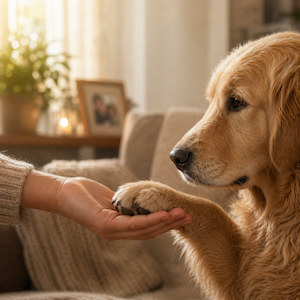
The human-animal bond represents a topic of growing scientific and public health relevance, as companion animals share close living environments with humans in a substantial proportion of households across many countries. This intimate cohabitation creates a shared microbial environment, facilitating constant, bidirectional exchange of microorganisms between pets and their owners. Here, we explore the dynamics of this microbial transfer and its influence on human health, specifically focusing on immune-mediated, metabolic, and gastrointestinal disorders. Drawing from the “One Health” concept, which recognizes the interconnectedness of human, animal, and environmental health, we examine how companion animals shape the composition of the human gut microbiota. Evidence suggests that while this exchange carries potential risk for transmitting pathogens and antimicrobial resistance, the overall effect appears beneficial. Pet exposure, particularly in early life, is associated with increased microbial diversity and enrichment of beneficial taxa such as Ruminococcus and Oscillospira. These alterations are linked to reduced risk of immune-mediated conditions like allergies and asthma, consistent with the ”microbiota hypothesis”. Furthermore, pet ownership correlates with lower prevalence of metabolic syndrome, potentially mediated by favorable shifts in gut microbiota, such as a reduced Firmicutes-to-Bacteroidetes ratio. However, household transmission of extended-spectrum β-lactamase-producing Enterobacterales represents a tangible public health concern requiring antimicrobial stewardship. We synthesize current findings, highlighting the household as a key epidemiological unit and positioning the shared microbiome as a critical factor in health outcomes of pet-owning families.
Downloads
1. Menezes J, Frosini SM, Weese S, et al. Transmission dynamics of ESBL/AmpC and carbapenemase-producing Enterobacterales between companion animals and humans. Front Microbiol 2024;15:1432240. DOI: https://doi.org/10.3389/fmicb.2024.1432240
2. Abdolghanizadeh S, Salmeh E, Mirzakhani F, et al. Microbiota insights into pet ownership and human health. Res Vet Sci 2024;171:105220. DOI: https://doi.org/10.1016/j.rvsc.2024.105220
3. Do KH, Park J, Kim N, . et al. Comparative analysis of gut microbiota in humans living with and without companion animals. Life 2024;14:1621. DOI: https://doi.org/10.3390/life14121621
4. Song SJ, Lauber C, Costello EK, et al. Cohabiting Family members share microbiota with one another and with their dogs. Elife 2013;2:e00458. DOI: https://doi.org/10.7554/eLife.00458
5. Ito Y, Nagasawa M, Koyama K, et al. Comparative analysis based on shared amplicon sequence variants reveals that cohabitation influences gut microbiota sharing between humans and dogs. Front Vet Sci 2024;11:1417461. DOI: https://doi.org/10.3389/fvets.2024.1417461
6. Wold AE. The hygiene hypothesis revised: is the rising frequency of allergy due to changes in the intestinal flora? Allergy 1998;53:20-5. DOI: https://doi.org/10.1111/j.1398-9995.1998.tb04953.x
7. Misic AM, Davis MF, Tyldsley AS, et al. The shared microbiota of humans and companion animals as evaluated from Staphylococcus carriage sites. Microbiome 2015;3:2. DOI: https://doi.org/10.1186/s40168-014-0052-7
8. Kates AE, Jarrett O, Skarlupka JH, et al. Household pet ownership and the microbial diversity of the human gut microbiota. Front Cell Infect Microbiol 2020;10:73. DOI: https://doi.org/10.3389/fcimb.2020.00073
9. Pavlíčková Z, Pafčo B, Ilík V, et al. Shaping the human gut microbiota: the role of canine companionship, lifestyle choices, and Blastocystis Sp. One Health 2025;20:100979. DOI: https://doi.org/10.1016/j.onehlt.2025.100979
10. Stenske KA, Bemis DA, Gillespie BE, et al. Comparison of clonal relatedness and antimicrobial susceptibility of fecal Escherichia coli from healthy dogs and their owners. Am J Vet Res 2009;70:1108-16. DOI: https://doi.org/10.2460/ajvr.70.9.1108
11. Lødrup Carlsen KC, Roll S, Carlsen KH, et al. Does Pet ownership in infancy lead to asthma or allergy at school age? Pooled analysis of individual participant data from 11 European birth cohorts. PLoS One 2012;7:e43214. DOI: https://doi.org/10.1371/journal.pone.0043214
12. Azad MB, Konya T, Maughan H, et al. Infant gut microbiota and the hygiene hypothesis of allergic disease: impact of household pets and siblings on microbiota composition and diversity. All Asth Clin Immun 2013;9:15. DOI: https://doi.org/10.1186/1710-1492-9-15
13. Tun HM, Konya T, Takaro TK, et al. Exposure to household furry pets influences the gut microbiota of infant at 3-4 months following various birth scenarios. Microbiome 2017;5:40. DOI: https://doi.org/10.1186/s40168-017-0254-x
14. Kalliomäki M, Kirjavainen P, Eerola, et al. Distinct patterns of neonatal gut microflora in infants in whom atopy was and was not developing. J Allergy Clin Immunol 2001;10:129-34. DOI: https://doi.org/10.1067/mai.2001.111237
15. Azad MB, Konya T, Guttman DS, et al. Infant gut microbiota and food sensitization: associations in the first year of life. Clin Exp Allergy 2015;45:632-43. DOI: https://doi.org/10.1111/cea.12487
16. Gómez-Gallego C, Forsgren M, Selma-Royo M, et al. The composition and diversity of the gut microbiota in children is modifiable by the household dogs: impact of a canine-specific probiotic. Microorganisms 2021;9;557. DOI: https://doi.org/10.3390/microorganisms9030557
17. Verdam FJ, Fuentes S, de Jonge C, et al. Human intestinal microbiota composition is associated with local and systemic inflammation in obesity. Obesity (Silver Spring) 2013;21:e607-15. DOI: https://doi.org/10.1002/oby.20466
18. Zhou J, Zhang Q, Zhao Y, et al. The relationship of megamonas species with nonalcoholic fatty liver disease in children and adolescents revealed by metagenomics of gut microbiota. Sci Rep 2022;12:22001. DOI: https://doi.org/10.1038/s41598-022-25140-2
19. Naik S, Bouladoux N, Wilhelm C, et al. Compartmentalized control of skin immunity by resident commensals. Science 2012;337:1115-9. DOI: https://doi.org/10.1126/science.1225152
20. Hesselmar B, Hicke-Roberts A, Lundell AC, et al. Pet-keeping in early life reduces the risk of allergy in a dose-dependent fashion. PLoS One 2018;13:e0208472. DOI: https://doi.org/10.1371/journal.pone.0208472
21. Nermes M, Endo A, Aarnio J, et al. Furry pets modulate gut microbiota composition in infants at risk for allergic disease. J Allergy Clin Immunol 2015;136:1688-90.e1. DOI: https://doi.org/10.1016/j.jaci.2015.07.029
22. Ownby DR, Johnson CC, Peterson EL. Exposure to dogs and cats in the first year of life and risk of allergic sensitization at 6 to 7 years of age. JAMA 2002;288:963-72. DOI: https://doi.org/10.1001/jama.288.8.963
23. Havstad S, Wegienka G, Zoratti EM, et al. Effect of prenatal indoor pet exposure on the trajectory of total IgE levels in early childhood. J Allergy Clin Immunol 2011;128:880-5.e4. DOI: https://doi.org/10.1016/j.jaci.2011.06.039
24. Lodge CJ, Allen KJ, Lowe AJ, et al. Perinatal cat and dog exposure and the risk of asthma and allergy in the urban environment: a systematic review of longitudinal studies. Clin Dev Immunol 2012;2012:176484. DOI: https://doi.org/10.1155/2012/176484
25. Redfern A, Suchodolski J, Jergens A. Role of the gastrointestinal microbiota in small animal health and disease. Vet Rec 2017;181:370. DOI: https://doi.org/10.1136/vr.103826
26. Hooda S, Minamoto Y, Suchodolski JS, Swanson KS. Current state of knowledge: the canine gastrointestinal microbiome. Animal Health Res Rev 2012;13:78-88. DOI: https://doi.org/10.1017/S1466252312000059
27. Gergen PJ, Mitchell HE, Calatroni A, et al. Sensitization and exposure to pets: the effect on asthma morbidity in the United States population. J Allergy Clin Immunol Pract 2018;6:101-7.e2. DOI: https://doi.org/10.1016/j.jaip.2017.05.019
28. Wegienka G, Johnson CC, Havstad S, et al. Lifetime dog and cat exposure and dog- and cat-specific sensitization at age 18 years. Clin Exp Allergy 2011;41:979-86. DOI: https://doi.org/10.1111/j.1365-2222.2011.03747.x
29. Ljungquist O, Ljungquist D, Myrenås M, et al. Evidence of household transfer of ESBL-/pAmpC-producing Enterobacteriaceae between humans and dogs – a pilot study. Infect Ecol Epidemiol 2016;6:31514. DOI: https://doi.org/10.3402/iee.v6.31514
30. Toombs-Ruane LJ, Benschop J, French NP, et al. Carriage of extended-spectrum-beta-lactamase- and AmpC beta-lactamase-producing Escherichia Coli strains from humans and pets in the same households. Appl Environl Microbiol 2020;86:e01613-20. DOI: https://doi.org/10.1128/AEM.01613-20
31. Singleton DA, Pongchaikul P, Smith S, et al. Temporal, spatial, and genomic analyses of Enterobacteriaceae clinical antimicrobial resistance in companion animals reveals phenotypes and genotypes of one health concern. Front Microbiol 2021;12:700698. DOI: https://doi.org/10.3389/fmicb.2021.700698
32. Heyworth JS, Cutt H, Glonek G. Does dog or cat ownership lead to increased gastroenteritis in young children in south Australia? Epidemiol Infect 2006;134:926-34. DOI: https://doi.org/10.1017/S0950268806006078
33. Barroso CS, Brown KC, Laubach D, et al. Cat and/or dog ownership, cardiovascular disease, and obesity: a systematic review. Vet Sci 2021;8:333. DOI: https://doi.org/10.3390/vetsci8120333
34. Arenas-Montes J, Perez-Martinez P, Vals-Delgado C, et al. Owning a pet is associated with changes in the composition of gut microbiota and could influence the risk of metabolic disorders in humans. Animals (Basel) 2021;11:2347. DOI: https://doi.org/10.3390/ani11082347
35. Miyake K, Kito K, Kotemori A, et al. Association between pet ownership and obesity: a systematic review and meta-analysis. Int J Environ Res Public Health 2020;17:3498. DOI: https://doi.org/10.3390/ijerph17103498
36. Zouiouich S, Loftfield E, Huybrechts I, et al. Markers of metabolic health and gut microbiome diversity: findings from two population-based cohort studies. Diabetologia 2021;64:1749-59. DOI: https://doi.org/10.1007/s00125-021-05464-w
37. Jiang C, Cui Z, Fan P, Du G. Effects of dog ownership on the gut microbiota of elderly owners. PLoS One 2022;17:e0278105. DOI: https://doi.org/10.1371/journal.pone.0278105
38. Bermudez Sanchez S, Pilla R, Sarawichitr B, et al. Fecal microbiota in client-owned obese dogs changes after weight loss with a high-fiber-high-protein diet. PeerJ 2020;8:e9706. DOI: https://doi.org/10.7717/peerj.9706
39. Linder DE, Santiago S, Halbreich ED. Is there a correlation between dog obesity and human obesity? Preliminary findings of overweight status among dog owners and their dogs. Front Vet Sci 2021;8:654617. DOI: https://doi.org/10.3389/fvets.2021.654617
How to Cite

This work is licensed under a Creative Commons Attribution-NonCommercial 4.0 International License.
PAGEPress has chosen to apply the Creative Commons Attribution NonCommercial 4.0 International License (CC BY-NC 4.0) to all manuscripts to be published.