
 https://doi.org/10.4081/ahr.2026.284
BL54 ACUPUNCTURE LANDMARK TO FACILITATE ULTRASOUND-GUIDED PIRIFORMIS MUSCLE INJECTION
S. Sorrenti1, M. Ciuffreda1, E. Pisello1, C. Pellegrino2, A. Monacelli2, G. Cucè3, L. Angelelli1, C. Piangatelli1, D. Galante4 | 1U.O.C. Anestesia Rianimazione Terapia del Dolore, AST Ancona, Fabriano (AN), Italy; 2Scuola di Specializzazione in Anestesia Rianimazione, Terapia Intensiva e del Dolore, Università Politecnica delle Marche, Ancona, Italy; 3Scuola di Specializzazione in Igiene e Medicina Preventiva, Università degli Studi di Messina, Italy; 4U.O.C. Anestesia e Rianimazione, ASL Foggia, Cerignola (FG), Italy

All claims expressed in this article are solely those of the authors and do not necessarily represent those of their affiliated organizations, or those of the publisher, the editors and the reviewers. Any product that may be evaluated in this article or claim that may be made by its manufacturer is not guaranteed or endorsed by the publisher.
Published: 21 September 2026
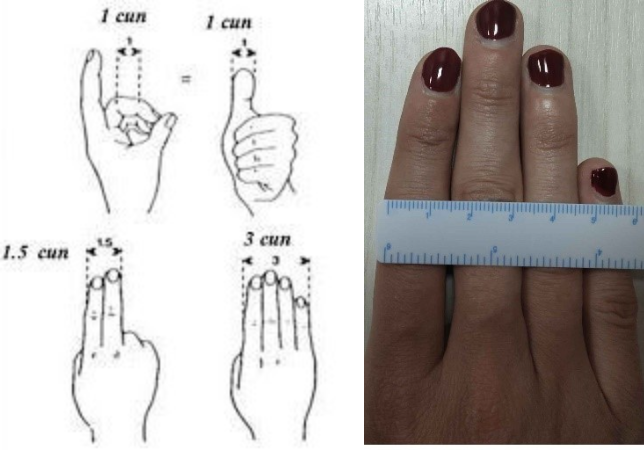
Methods. A prospective observational study included 30 consecutive patients (15 women and 15 men; age range 16–45 years) diagnosed with piriformis syndrome and referred for ultrasound-guided piriformis muscle injection. The BL54 acupuncture point was identified approximately 3 cun lateral to the midline at the level of the sacral hiatus. The individualized 3-cun measurement was converted into centimeters for each patient and marked on the skin. A convex ultrasound probe was then used to evaluate the underlying anatomy, identify the piriformis muscle, and assess its morphology before performing the ultrasound-guided injection.
Results. In all 30 patients, ultrasound examination performed from the BL54 landmark enabled rapid identification of the piriformis muscle regardless of body habitus. The muscle was consistently visualized at the thickest portion of its muscle belly, facilitating optimal needle targeting and procedural planning. The combined use of an individualized acupuncture landmark and ultrasound guidance improved anatomical orientation and simplified localization of the target muscle during the procedure.
Conclusions. The BL54 (Zhibian) acupuncture point appears to be a reliable anatomical landmark for ultrasound-guided piriformis muscle injection. Combining individualized acupuncture-based surface anatomy with ultrasound imaging may facilitate target identification, personalize the procedure, and reduce operator dependency. Larger comparative studies are warranted to evaluate the impact of this approach on procedural accuracy, clinical outcomes, and reproducibility.
Downloads
1. Beaton LE, Anson BJ. The relation of the sciatic nerve and its subdivisions to the piriformis muscle. Anat Rec. 1937;70(1):1-5. doi:10.1002/ar.1090700102.
2. Martin HD, Reddy M, Gómez-Hoyos J. Deep gluteal syndrome. J Hip Preserv Surg. 2015;2(2):99-107. doi:10.1093/jhps/hnv029.
3. Darrieutort-Laffite C, Blanchard F, Le Goff B. Piriformis syndrome: diagnosis and management. Joint Bone Spine. 2023;90(2):105531. doi:10.1016/j.jbspin.2022.105531.
How to Cite

This work is licensed under a Creative Commons Attribution-NonCommercial 4.0 International License.
PAGEPress has chosen to apply the Creative Commons Attribution NonCommercial 4.0 International License (CC BY-NC 4.0) to all manuscripts to be published.