
 https://doi.org/10.4081/ahr.2026.211
Clinical translational nephrology in global primary care: bridging innovation, prevention, and equity
All claims expressed in this article are solely those of the authors and do not necessarily represent those of their affiliated organizations, or those of the publisher, the editors and the reviewers. Any product that may be evaluated in this article or claim that may be made by its manufacturer is not guaranteed or endorsed by the publisher.
Published: 14 September 2026
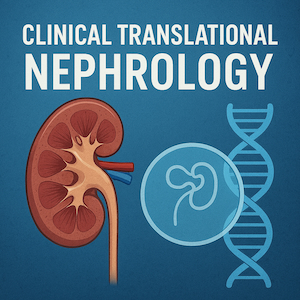
Translational medicine bridges the gap between scientific discovery and clinical application, playing a critical role in addressing complex global health challenges, particularly in nephrology. This narrative review explores the multifaceted landscape of translational medicine from a global perspective, focusing on the challenges, innovations, and future directions that shape the field. Key global challenges include disparities in resources among low and middle income countries (LMICs), regulatory fragmentation, and limitations in data integration and interoperability. Emerging innovations such as omics technologies, artificial intelligence, and nanotechnology are driving progress by enabling more precise diagnostics and personalized interventions for kidney diseases. Looking forward, the future of translational medicine lies in enhancing international collaboration, implementing personalized medicine approaches, and addressing ethical concerns around data use and equitable access. Together, these efforts hold the potential to transform kidney care and reduce global health disparities through more effective and inclusive translational research.
Downloads
1. Rinschen MM, Knepper MA. Navigating the omics frontier: challenges, opportunities, and the future of precision nephrology. J Am Soc Nephrol 2023;34:1943-4. DOI: https://doi.org/10.1681/ASN.0000000000000255
2. Yau K, Wang C, Al Batran R, et al. Knowledge translation in glomerulonephritis: successes in translational research from the bench to bedside. Can J Kidney Health Dis 2023;10:20543581231191839. DOI: https://doi.org/10.1177/20543581231191839
3. Vogel AL, Haynes BM, Hussain SF, et al. Areas of strength and opportunities for growth in translational science education and training: Results of a scoping review from the NCATS Education Branch. Clin Transl Sci 2023;16:1526-46. DOI: https://doi.org/10.1111/cts.13570
4. Hill NR, Fatoba ST, Oke JL, et al. Global prevalence of chronic kidney disease - a systematic review and meta-analysis. PLoS One 2016;11:e0158765. DOI: https://doi.org/10.1371/journal.pone.0158765
5. Levin A, Tonelli M, Bonventre J, et al. Global kidney health 2017 and beyond: a roadmap for closing gaps in care, research, and policy. Lancet 2017;390:1888-17. DOI: https://doi.org/10.1016/S0140-6736(17)30788-2
6. Noels H, Jankowski V, Schunk SJ, et al. Post-translational modifications in kidney diseases and associated cardiovascular risk. Nat Rev Nephrol 2024;20:495-512. DOI: https://doi.org/10.1038/s41581-024-00837-x
7. Ju W, Nair V, Smith S, et al. Tissue transcriptome-driven identification of epidermal growth factor as a chronic kidney disease biomarker. Sci Transl Med 2015;7:316ra193.
8. Kiryluk K, Li Y, Scolari F, et al. Discovery of new risk loci for IgA nephropathy implicates genes involved in immunity against intestinal pathogens. Nat Genet 2014;46:1187-96. DOI: https://doi.org/10.1038/ng.3118
9. Ladin K, Rossi A. Person-centered kidney education: the path forward. Kidney Med 2020;2:511-3. DOI: https://doi.org/10.1016/j.xkme.2020.08.001
10. Boccellino M. Advances in molecular and translational medicine. Int J Mol Sci 2023;24:7726. DOI: https://doi.org/10.3390/ijms24097726
11. Jack A. Advancements in translational medicine: bridging the gap between bench and bedside. Int Res J Pharm Pharmacol 2023;11:78.
12. Hwang TJ, Kesselheim AS, Bourgeois FT. Postmarketing trials and pediatric device approvals. Pediatrics 2014;133:e1197-202. DOI: https://doi.org/10.1542/peds.2013-3348
13. Hegyi P, Petersen OH, Holgate S, et al. Academia Europaea Position Paper on Translational Medicine: the cycle model for translating scientific results into community benefits. J Clin Med 2020;9:1532. DOI: https://doi.org/10.3390/jcm9051532
14. Sonawane AR, Weiss ST, Glass K, Sharma A. Network medicine in the age of biomedical big data. Front Genet 2019;10:294. DOI: https://doi.org/10.3389/fgene.2019.00294
15. Zitnik M, Nguyen F, Wang B, et al. Machine learning for integrating data in biology and medicine: principles, practice, and opportunities. Inf Fusion 2019;50:71-91. DOI: https://doi.org/10.1016/j.inffus.2018.09.012
16. Jensen PB, Jensen LJ, Brunak S. Mining electronic health records: towards better research applications and clinical care. Nat Rev Genet 2012;13:395-405. DOI: https://doi.org/10.1038/nrg3208
17. El-Achkar TM, Eadon MT, Kretzler M, et al. Precision medicine in nephrology: an integrative framework of multidimensional data in the Kidney Precision Medicine Project. Am J Kidney Dis 2024;83:402-10. DOI: https://doi.org/10.1053/j.ajkd.2023.08.015
18. Filippone EJ, Gulati R, Farber JL. Contemporary review of IgA nephropathy. Front Immunol 2024;15:1436923. DOI: https://doi.org/10.3389/fimmu.2024.1436923
19. Beam AL, Kohane IS. Big data and machine learning in health care. JAMA 2018;319:1317-8. DOI: https://doi.org/10.1001/jama.2017.18391
20. Esteva A, Robicquet A, Ramsundar B, et al. A guide to deep learning in healthcare. Nat Med 2019;25:24-9. DOI: https://doi.org/10.1038/s41591-018-0316-z
21. Nageeta F, Waqar F, Allahi I, et al. Precision medicine approaches to diabetic kidney disease: personalized interventions on the horizon. Cureus 2023;15:e45575. DOI: https://doi.org/10.7759/cureus.45575
22. Roointan A, Xu R, Corrie S, et al. Nanotherapeutics in kidney disease: innovations, challenges, and future directions. J Am Soc Nephrol 2025;36:500-18. DOI: https://doi.org/10.1681/ASN.0000000608
23. Dzau VJ, Ginsburg GS, Van Nuys K, et al. Aligning incentives to fulfill the promise of personalized medicine. Lancet 2015;385:2118-9. DOI: https://doi.org/10.1016/S0140-6736(15)60722-X
24. Collins FS, Varmus H. A new initiative on precision medicine. N Engl J Med 2015;372:793-5. DOI: https://doi.org/10.1056/NEJMp1500523
25. Jayaraman P, Crouse A, Nadkarni G, Might M. A primer in precision nephrology: optimizing outcomes in kidney health and disease through data-driven medicine. Kidney360 2023;4:e544-54. DOI: https://doi.org/10.34067/KID.0000000000000089
26. Tiffin N, George A, LeFevre AE. How to use relevant data for maximal benefit with minimal risk: digital health data governance to protect vulnerable populations in low-income and middle-income countries. BMJ Glob Health 2019;4:e001395. DOI: https://doi.org/10.1136/bmjgh-2019-001395
CRediT authorship contribution
Syed Shahmeer Raza, conceptualization, writing – manuscript drafting, writing – review & editing. Mariana Amir, writing – manuscript drafting, writing – review & editing. Abid Nawaz Khan Adil, writing – manuscript drafting, writing – review & editing. Giustino Varrassi, conceptualization, writing – manuscript drafting, writing – review & editing. All authors read and approved the final version of the manuscript and agreed to be accountable for all aspects of the work.
How to Cite

This work is licensed under a Creative Commons Attribution-NonCommercial 4.0 International License.
PAGEPress has chosen to apply the Creative Commons Attribution NonCommercial 4.0 International License (CC BY-NC 4.0) to all manuscripts to be published.