

 https://doi.org/10.4081/ahr.2026.151
RADIOFREQUENCY DENERVATION IN THE MANAGEMENT OF SACROILIAC JOINT PAIN: A COMPARATIVE STUDY OF TWO TECHNIQUES
E. Antognozzi1, G. Biondi2, A. Gioia2, E. Piraccini2, P. Pogliaghi3, M.C. Tonnarelli3 | 1Department of Anaesthesia and Intensive Care, Hospital of San Benedetto del Tronto (AP), Italy; 2Pain Therapy Center, Bellaria Hospital, Bologna, Italy; 3Department of Anaesthesia and Intensive Care, Hospital of Bentivoglio (BO), Italy
All claims expressed in this article are solely those of the authors and do not necessarily represent those of their affiliated organizations, or those of the publisher, the editors and the reviewers. Any product that may be evaluated in this article or claim that may be made by its manufacturer is not guaranteed or endorsed by the publisher.
Published: 6 May 2026
Background and Aims. Sacroiliac joint (SIJ) dysfunction is a significant source of chronic low back pain, affecting 10% to 25% of patients. When conservative treatments fail, radiofrequency (RF) denervation is a common second-line intervention. This study aims to evaluate the efficacy of RF denervation in SIJ dysfunction and to compare the clinical efficacy and operational efficiency of two different RF techniques: the monopolar clock technique and the bipolar palisade technique.
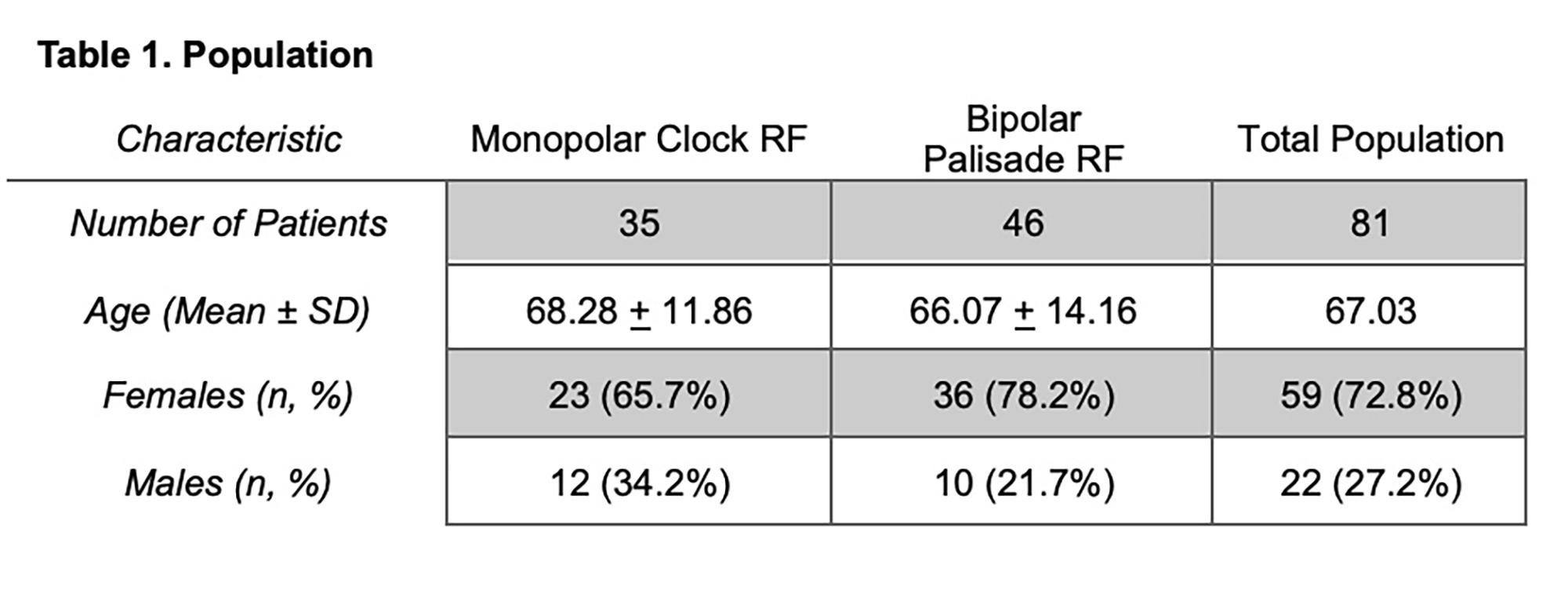
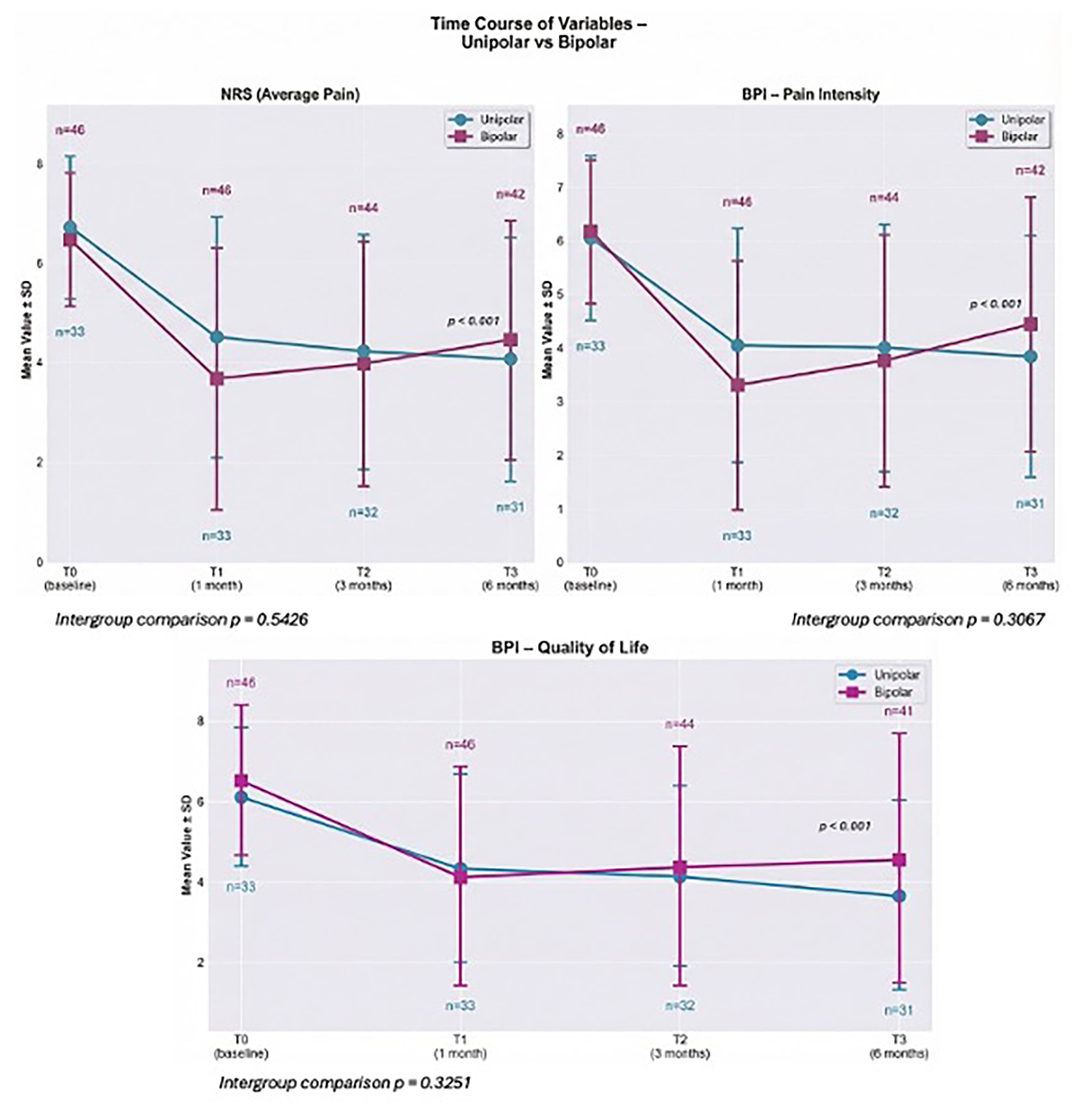
Methods. A retrospective observational study was conducted on 81 patients who underwent RF for SIJ dysfunction: 35 underwent monopolar clock RF and 46 underwent bipolar palisade RF. We collected NRS, BPI (BPI_DOL and BPI_QUAL), and opioid consumption at baseline and in the follow-up at 1, 3, and 6 months after the procedure. Operational parameters, including fluoroscopy time and the number of shots, were also recorded.
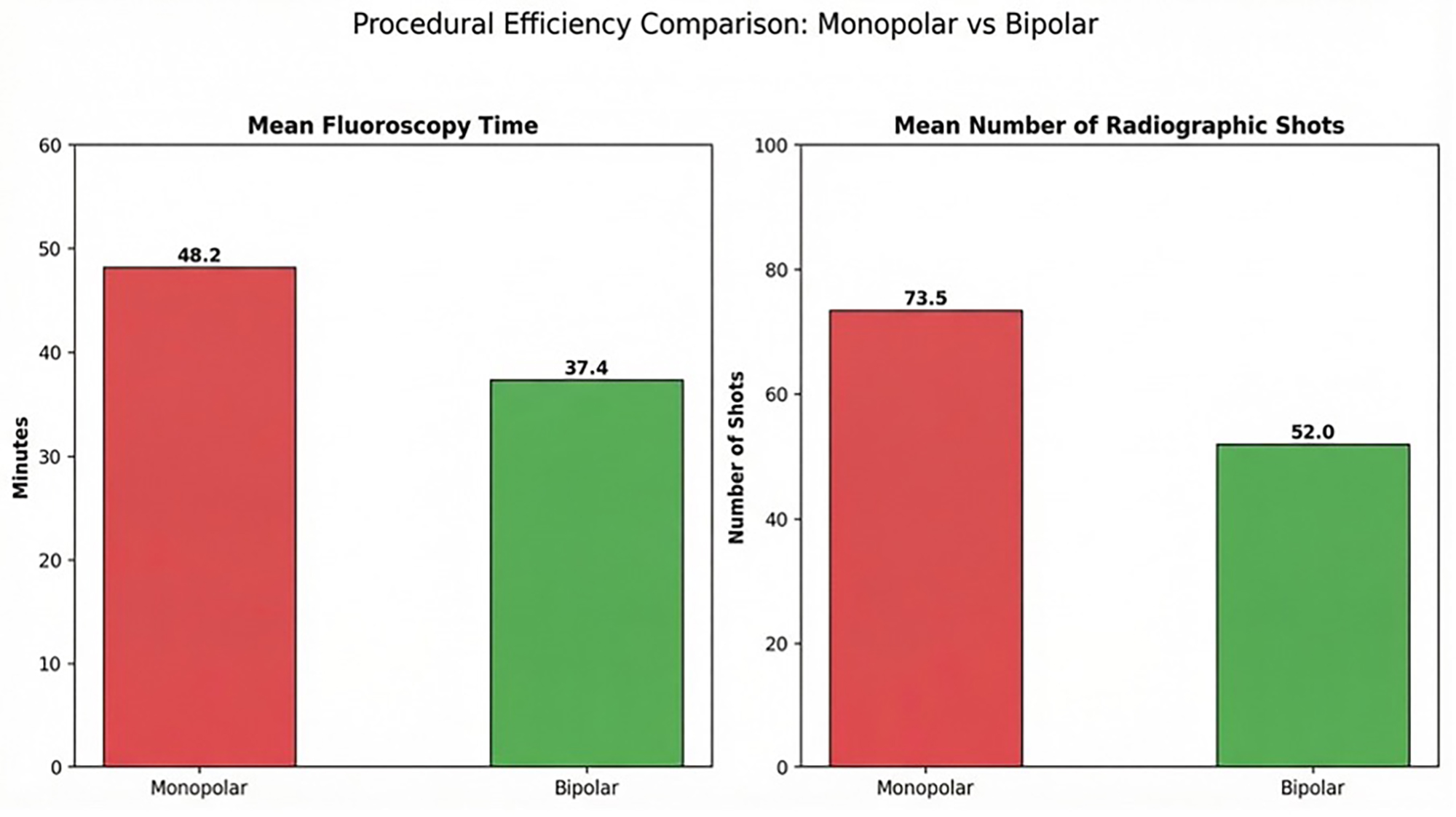
Results. Both techniques significantly reduced pain and opioid use by over 30% at the 6-month follow-up, with no statistically significant difference between groups. However, the bipolar palisade technique demonstrated superior operational efficiency, requiring significantly shorter fluoroscopy times and fewer shots.
Conclusions. Radiofrequency denervation is highly effective for the mid-to-long-term management of SIJ pain. While both techniques provide comparable clinical relief at 6 months, the bipolar palisade technique is more efficient by reducing radiation exposure for both patients and operators.

Downloads
How to Cite

This work is licensed under a Creative Commons Attribution-NonCommercial 4.0 International License.
PAGEPress has chosen to apply the Creative Commons Attribution NonCommercial 4.0 International License (CC BY-NC 4.0) to all manuscripts to be published.